 By
Thailand’s economy could face severe disruption or collapse if Myanmar migrant workers were forced to return home, according to Weera Saengthong, leader of the migrant labour group Bright Future. In an interview published by Khaosod English on 5 November 2026, Weera described Myanmar workers as Thailand’s main foreign workforce, particularly in manufacturing, fisheries, seafood processing and retail.
“If all the workers returned home, it would be like a racehorse suddenly collapsing in the middle of a race,” Weera said. “Businesses and the economy would be devastated and unable to move forward. Myanmar workers are Thailand’s main foreign workforce. Without them, Thailand would come to a standstill for a period.”
Why registration has become a flashpoint
The immediate dispute concerns Myanmar’s Certificate of Identity (CI) centres in Thailand. Weera said the five CI centres had attracted very few applicants since opening, and he urged Thai authorities to suspend reliance on them and instead introduce a registration system managed entirely by Thai authorities.
His concern is that the CI process collects identities and residential addresses that could become accessible to Myanmar’s military authorities, potentially exposing relatives in Myanmar to intimidation, financial demands or pressure related to military conscription. Khaosod English noted that Weera’s allegation that Myanmar’s military government uses revenue from the CI system to support military operations was not independently verified in the interview.
The registration arrangements date back more than two decades to former Prime Minister Thaksin Shinawatra’s government. Weera wants the pink-card identification system restored, combining identification and work permit functions in a single document.
What the costs mean for workers and employers
The financial burden on workers is substantial. Weera said workers face combined costs of up to 30,000 baht per worker. Myanmar’s military government imposes a 2 per cent tax calculated on a monthly salary of 7,500 baht, amounting to 150 baht a month or 3,600 baht over two years.
Fees charged through service providers and intermediaries can push the cost to 6,500 baht. Additional payments to brokers may add another 2,000 to 3,000 baht. In some areas of Chonburi province, brokerage fees range from 5,500 to 10,000 baht. Workers can also face expenses for smart cards, visas and employment arrangements.
“Not every worker can afford these expenses,” Weera said.
Myanmar’s Family Remittance Management System (FRMS) adds another layer. It requires workers to transfer 25 per cent of their income back to Myanmar. Weera alleged the FRMS offers unfavourable exchange rates and insufficient assurances that money will reach workers’ families.

What HR and payroll teams should watch
For employers in Thailand, the registration bottleneck creates a direct compliance risk. Weera warned that without changes, some workers could turn to informal brokerage activities or abandon registration altogether, leaving them without legal employment status. “The longer the delay, the more workers will fall out of the system and become undocumented,” he said.
That outcome would hurt Thai businesses dependent on migrant labour. HR teams in manufacturing, fisheries, seafood processing and retail should review how many of their workers currently hold valid documentation and whether any are waiting on CI centre appointments that may not come.
Payroll teams should also note the remittance requirement. If workers must send 25 per cent of income through the FRMS, payroll deductions or net pay calculations may need adjustment depending on how the system is implemented in practice. Employers should confirm the current rules with Thai labour authorities before changing any payroll process.
What happens next
Weera urged the Thai government to “reconsider and reopen worker registration as quickly as possible.” He argued that a Thai-managed system would reduce dependence on Myanmar’s military government and keep workers inside legal employment frameworks.
The policy choice facing Thai authorities is whether to continue accepting CI centre documentation or to revert to a domestic identification system. For employers, the practical question is whether their workforce documentation remains valid under whichever approach prevails. HR teams should monitor announcements from the Ministry of Labour and prepare for the possibility that some workers may need re-registration under new rules.
Sources: Khaosod English
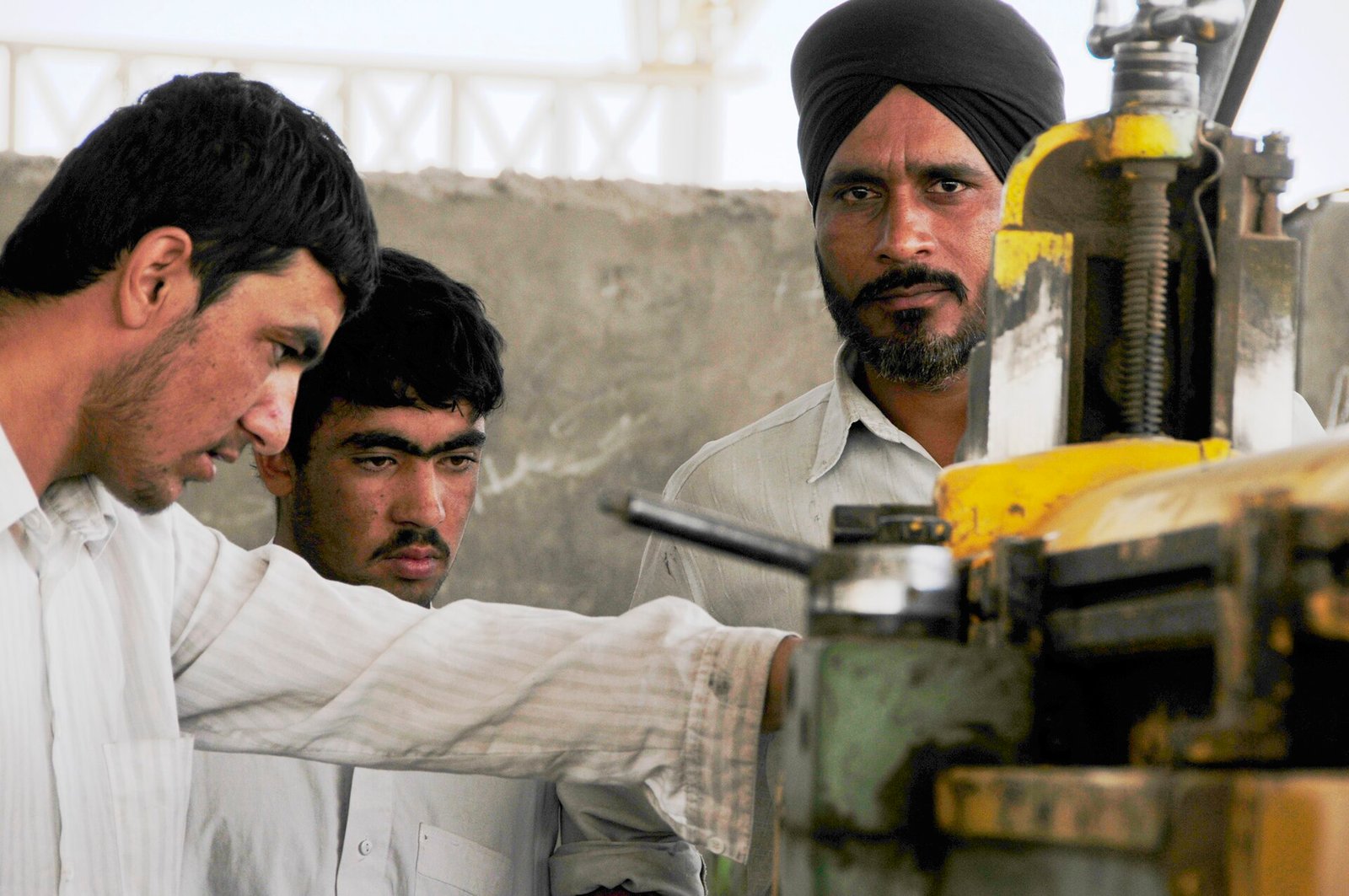
Photo: Factory workers in Herat by Mass Communications Specialist 2nd Class Riza Caparros, Public domain