 By
Vedanta Group has made a minimum 35 per cent representation of women at every level of management mandatory, according to HRKatha. The announcement, reported on 13 November 2026, positions the natural resources company among a small group of Indian employers setting formal gender representation targets for leadership roles.
Anil Agarwal, chairman of Vedanta Group, said organisations must move beyond acknowledging gender diversity and take concrete steps to ensure women have equal access to career opportunities, leadership positions and fair compensation. He noted that women account for almost half the country’s population and that increased representation of women in organisations and leadership positions will be critical to India’s economic and social development.
What the 35 per cent target covers
The mandate applies to every management level within Vedanta Group, not just the most senior band. That distinction matters for HR teams because it signals a pipeline requirement rather than a single boardroom metric. A company can meet a headline diversity figure by hiring women into a few visible roles while leaving middle management unchanged. Vedanta’s framing, as reported, closes that gap by requiring representation at each tier.
The announcement does not specify a deadline, a baseline figure or how the company will measure compliance. HRKatha reports that the benchmark raises questions around hiring, succession planning, leadership development, pay equity and retention. Those details will determine whether the policy becomes an operational framework or remains a stated ambition.
How Indian employers typically approach gender targets
Indian labour law does not mandate private sector gender quotas for management roles. The Companies Act 2013 requires at least one woman director on the board of certain listed and large public companies, but that obligation stops at board level. Beyond that, gender representation targets are voluntary employer decisions.
Vedanta’s move sits within a broader pattern of Indian conglomerates announcing diversity commitments, though few have published management-level minimums. The absence of a statutory requirement means enforcement, reporting and accountability rest with the company itself. HR teams in other organisations watching this announcement should treat it as a benchmark rather than a compliance obligation.
What it means for HR, payroll and hiring teams
For HR leaders, a 35 per cent minimum at every management level creates immediate implications for succession planning. Organisations cannot promote their way to that figure without first building a pipeline of women in feeder roles. That means reviewing where women currently sit in the hierarchy, identifying the levels where representation falls short and mapping the time required to develop internal candidates.
Payroll teams have a related but distinct role. Agarwal’s statement, as paraphrased by HRKatha, ties gender inclusion to equal pay for equal work and transparent opportunities for professional advancement. That requires payroll and compensation functions to audit pay bands by gender at each management level and correct unexplained gaps before promotion cycles begin. A representation target without a pay equity review can create a retention problem: women promoted into management roles who discover they are paid less than male peers are unlikely to stay.
Hiring teams face the most immediate pressure. External hiring can accelerate progress toward a representation target, but only if the candidate pool supports it. Recruiters may need to review job descriptions for gendered language, expand sourcing channels and ensure interview panels include women. The risk is that a numeric target leads to rushed hiring decisions that undermine the policy’s intent.
Practical steps for employers considering a similar policy
Organisations that want to follow Vedanta’s lead should start with a baseline audit. That means calculating current women’s representation at each management level, not just overall. A company with 35 per cent women in management overall may have 50 per cent at junior levels and 10 per cent at senior levels. The Vedanta mandate, as reported, would treat that as non-compliant.
The second step is to model the internal pipeline. If a company needs 35 per cent women at a level that currently has 15 per cent, HR should estimate how many promotions, external hires and retention improvements are needed over what period. That exercise often reveals that the binding constraint is not hiring but retention: women leaving mid-career reduces the pool available for senior roles.
The third step is to align pay and promotion processes. HRKatha notes that achieving meaningful representation will require organisations to build stronger talent pipelines and ensure women have support and opportunities to advance at every career stage. That includes reviewing who gets nominated for leadership development programmes, who receives stretch assignments and how promotion decisions are made.
| Management level | Typical current representation | Gap to 35 per cent | Primary lever |
|---|---|---|---|
| Junior management | Often 25 to 40 per cent | Small or none | Retention and development |
| Middle management | Often 15 to 25 per cent | Moderate | Promotion and sponsorship |
| Senior management | Often 5 to 15 per cent | Large | External hiring and succession |
The table illustrates a common pattern in Indian companies, though individual figures vary widely by sector. Natural resources and manufacturing employers, including Vedanta’s industry, typically start from lower baselines than services or technology firms.
What remains unclear
The HRKatha report does not specify whether the 35 per cent minimum applies to Vedanta’s global operations or only its Indian workforce. It also does not state whether the target includes women in non-management roles who may be eligible for promotion, or whether contractors and temporary staff count toward the figure. Those definitions will shape how the policy is implemented and how other employers interpret the benchmark.
The announcement also does not describe consequences for business units that fail to meet the target. Without accountability mechanisms, representation mandates can become aspirational statements. HR leaders watching this development should look for follow-up reporting on how Vedanta links the target to leadership performance reviews, compensation or business unit scorecards.
Sources: HRKatha
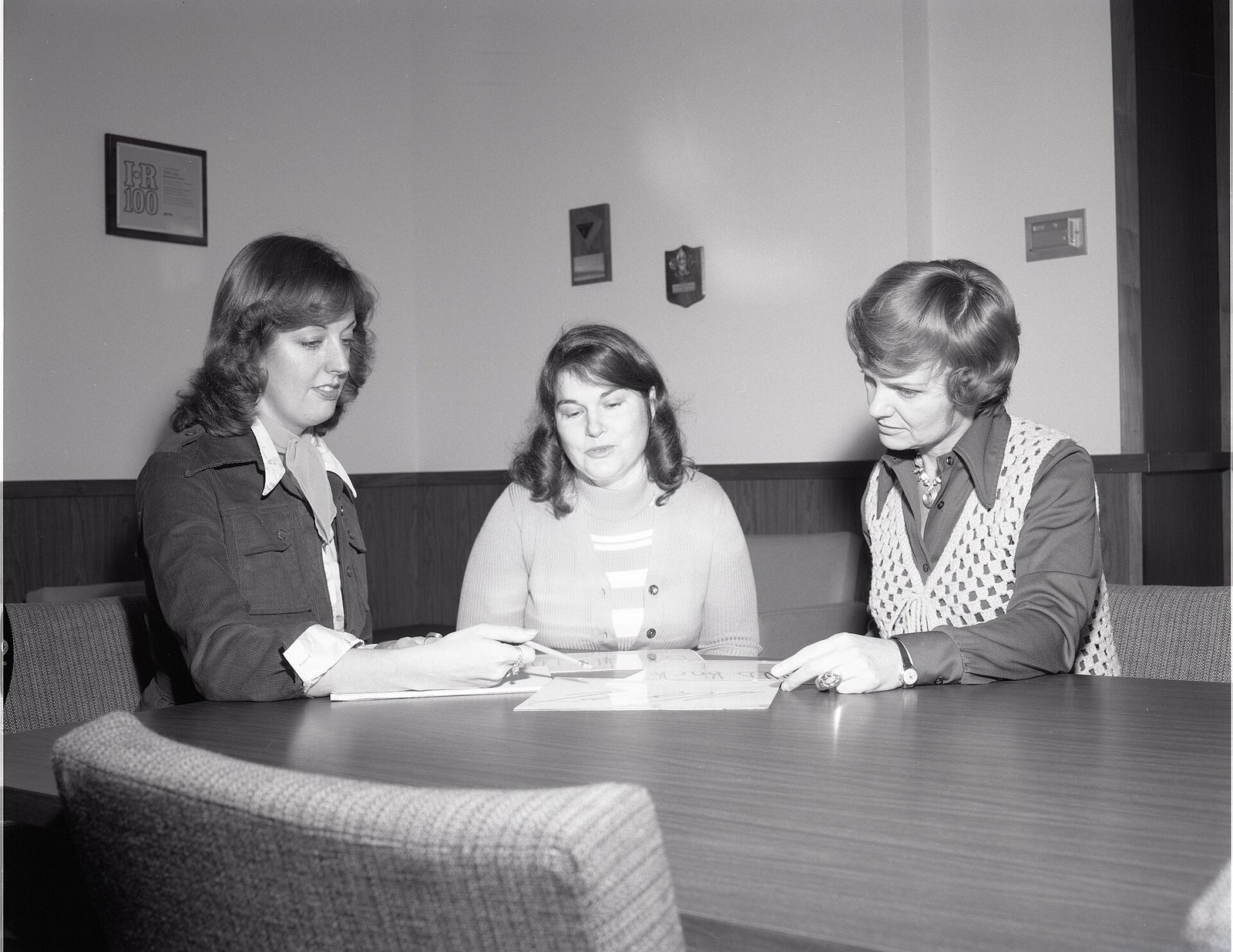
Photo: BUSINESS PROFFESIONAL WOMENS BPW MEETING WITH T HORVATH - MRS SLABY - M EDWARDS by Unknown authorUnknown author or not provided, Public domain