 By
The Department of Labor and Employment (DOLE) launched its Sagip-Trabaho program in Valenzuela City on Thursday, November 5, 2026, according to The Chronicle. The program will cover up to 90 days of wages for workers in businesses facing temporary financial or operational difficulties.
Labor Secretary Francis Tolentino led the launch through DOLE’s CAMANAVA Field Office, with 13 partner employers and more than 200 workers participating. Sagip-Trabaho operates under the existing Tulong Panghanapbuhay sa Ating Disadvantaged/Displaced Workers (TUPAD) program and supports President Ferdinand Marcos Jr.’s directive to make government assistance more accessible to Filipino workers and businesses.
What Sagip-Trabaho is designed to do
Sagip-Trabaho targets micro, small and medium enterprises (MSMEs) that are experiencing temporary setbacks but want to retain their workforce. Instead of laying off workers, eligible employers can receive wage assistance for up to 90 days, giving them breathing room while operations recover.
The program sits within TUPAD, which has historically provided emergency employment to displaced and disadvantaged workers. Sagip-Trabaho shifts that mechanism toward job preservation rather than post-displacement relief. The goal is to prevent job losses before they happen, rather than responding after workers have already been let go.
At the Valenzuela launch, Tolentino framed the program as a two-way commitment. Employers receive support to keep operating, while workers are expected to maintain productivity and loyalty. “What we ask of our workers is that they continue to demonstrate the same level of devotion, loyalty, diligence, and productivity,” Tolentino said.
How the wage assistance works in practice
The program covers up to 90 days of wages for eligible workers. The launch in Valenzuela served as an orientation for participating employers and employees, ensuring they understood the implementation guidelines and job preservation objectives.
The initial rollout was conducted through DOLE’s CAMANAVA Field Office, which covers Caloocan, Malabon, Navotas, and Valenzuela City. This marks the program’s first implementation in Metro Manila.
For HR and payroll teams, the key operational question is how the wage subsidy flows. The available reporting does not specify whether DOLE pays workers directly or reimburses employers. Payroll managers should confirm the disbursement mechanism with their local DOLE field office before budgeting around the assistance.

What this means for HR and payroll teams
For HR managers at MSMEs in the Philippines, Sagip-Trabaho introduces a potential alternative to retrenchment when cash flow tightens. The program’s existence changes the calculus for workforce planning during downturns: before initiating layoffs, employers may now have a government-backed option to retain staff for up to three months.
Payroll teams should treat the wage assistance as a temporary bridge, not a permanent subsidy. The program is explicitly designed for businesses experiencing temporary financial or operational setbacks, not chronic insolvency. Employers should document the nature of their financial difficulty and be prepared to demonstrate that the setback is temporary if required during the application or audit process.
The program also carries expectations for workers. Tolentino’s remarks at the launch emphasized that workers should continue to show diligence and productivity while receiving assistance. HR teams may want to communicate this expectation clearly to employees to avoid any perception that the subsidy period is a reduced-expectation arrangement.
Steps for employers considering the program
Employers interested in Sagip-Trabaho should start with their local DOLE field office. The CAMANAVA Field Office handled the Valenzuela rollout, but other regional and field offices will likely administer the program in their respective areas.
The launch event included an orientation component, suggesting that DOLE expects employers and workers to understand the guidelines before participation begins. Employers should request the implementation guidelines and review eligibility criteria, documentation requirements, and the process for claiming wage assistance.
Because the program operates under TUPAD, employers may need to meet TUPAD-related requirements in addition to Sagip-Trabaho-specific criteria. The exact documentation has not been detailed in the available reporting, so direct confirmation with DOLE is necessary.
What remains unclear
The available reporting leaves several practical questions unanswered. The specific eligibility thresholds for “temporary financial or operational difficulties” have not been published. The wage ceiling or calculation method for the 90-day coverage is not specified. The disbursement timeline and whether assistance is paid in advance or as reimbursement are also unclear.
Employers should not assume automatic qualification. The program launched with 13 partner employers in Valenzuela, suggesting a selective or phased approach rather than open enrollment. Businesses outside Metro Manila should check whether the program has reached their region or is still rolling out.
For payroll compliance, employers should continue meeting all statutory obligations during the assistance period. The program covers wages, but it does not necessarily cover employer contributions to SSS, PhilHealth, or Pag-IBIG. Payroll teams should confirm with DOLE and the relevant agencies how statutory contributions are handled during the subsidy period.
Sources: Manila Standard, thechronicle.com.ph
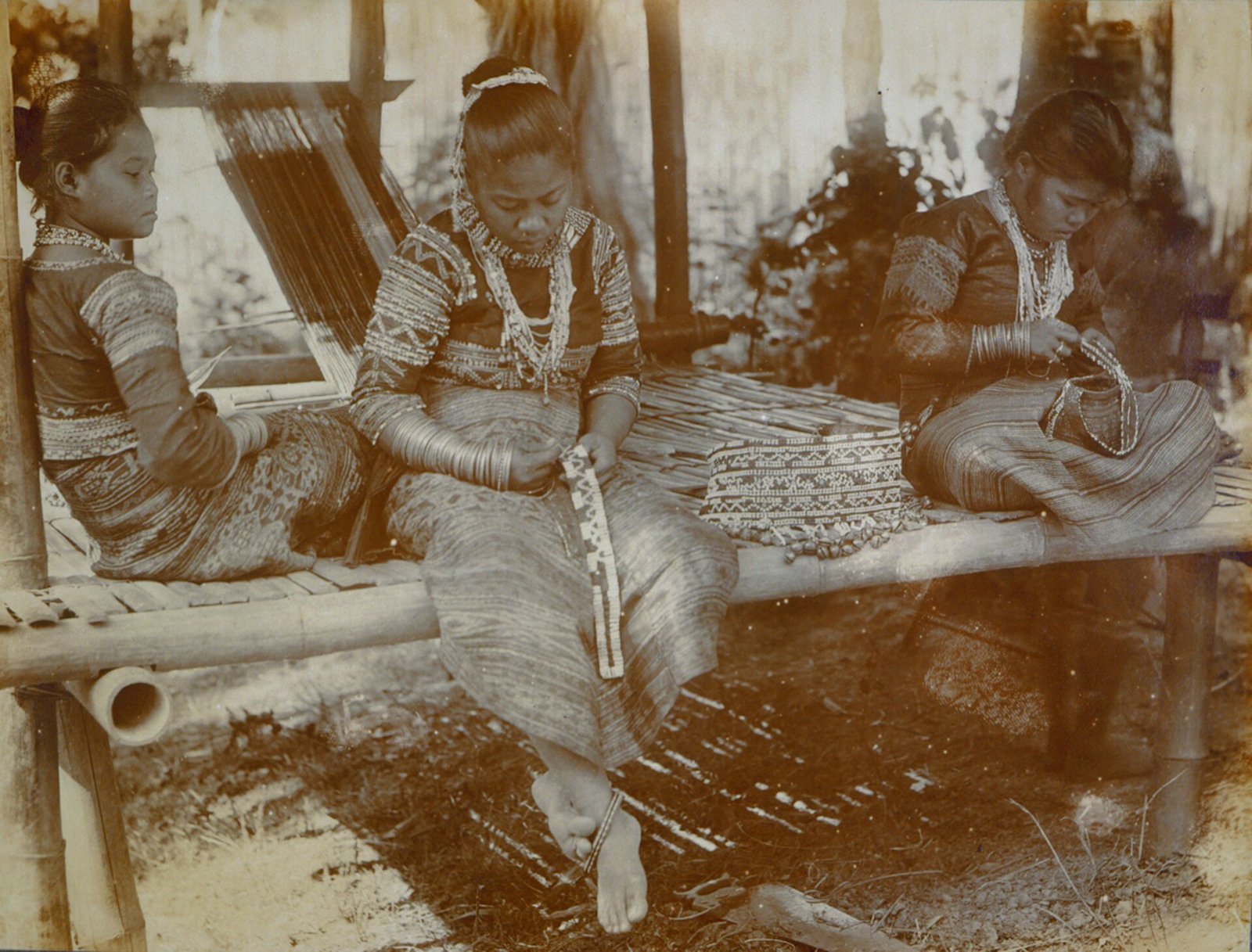
Photo: "Woman bead workers of the Moro Bagabo tribe." Philippine Reservation, Departmen by Unknown authorUnknown author, Public domain