 By
Singapore’s Ministry of Manpower (MOM) is investigating approximately 45 companies involved in Changi Airport operations over suspected breaches of foreign worker regulations, according to wilayah.com.my. The probe covers alleged false declarations and the unauthorised deployment of work pass holders.
About 270 foreign workers employed by contractors and subcontractors of airport ground services provider SATS have been identified for further investigation. Authorities are examining whether actual job assignments complied with conditions attached to employment passes. The investigations follow a recent inspection during which MOM discovered Employment Pass holders performing baggage handling duties. Preliminary findings suggest salaries and occupations declared in Employment Pass applications may have been inaccurate.
Why baggage handling duties trigger scrutiny
Singapore’s work pass framework ties each pass to a specific occupation, salary band and employer. An Employment Pass, for instance, is granted based on the applicant’s qualifications, the declared role and the salary offered. When a pass holder performs duties that differ materially from the registered occupation, the original application may no longer reflect reality.
Baggage handling is typically classified as a lower-skilled role. If Employment Pass holders were found doing that work, it raises two immediate questions for MOM. First, whether the declared occupation was inflated to secure a pass the worker would not otherwise qualify for. Second, whether the declared salary was actually paid or merely stated on paper. Either scenario undermines the integrity of the work pass system and can displace local workers from roles that should be open to them.
What the law says about false declarations and illegal deployment
Under Singapore’s Employment of Foreign Manpower Act, individuals or companies found guilty of making false declarations in work pass applications may face fines of up to S$20,000, imprisonment of up to two years, or both. Employers found guilty of illegally deploying foreign workers may be fined up to S$10,000 and could face restrictions on hiring work pass holders.
The penalties are not merely financial. Companies convicted of work pass offences can be barred from hiring foreign workers for a period, which for labour-intensive operations such as ground handling can be operationally severe. Directors and key personnel may also be held personally liable where they are found to have authorised or condoned the breaches.

What this means for HR and payroll teams
The investigation highlights a compliance gap that can emerge in multi-tiered contracting arrangements. SATS is the named ground services provider, but the workers under scrutiny are employed by its contractors and subcontractors. HR teams in similar structures should treat this as a prompt to review how pass holder duties are documented and verified across their own supply chains.
Payroll records matter here. If a worker’s payslip shows a salary lower than the amount declared in the work pass application, that discrepancy can itself be evidence of a false declaration. HR and payroll teams should ensure that actual paid salaries match declared salaries for every pass holder, and that any change in role or duties is reflected in a new pass application before the change takes effect.
The MOM has instructed SATS to strengthen supervision of contractors and subcontractors, particularly verifying whether foreign employees are assigned duties consistent with approved work passes. For employers, that means contractor agreements should include explicit obligations to maintain work pass compliance and to report any changes in worker deployment.
Common mistakes that lead to violations
Several patterns tend to recur in work pass enforcement cases. One is treating the pass as a general permission to work rather than a permission tied to a specific role. Another is using a higher-skilled pass to fill a lower-skilled vacancy because the lower-skilled quota has been exhausted or because recruitment is faster. A third is failing to update MOM when a worker’s duties change after a reorganisation or a change in client contracts.
The table below summarises the key distinctions employers should keep in mind.
| Work pass type | Tied to specific occupation | Common misuse pattern |
|---|---|---|
| Employment Pass | Yes, declared role and salary | Deployed to lower-skilled duties after approval |
| S Pass | Yes, sector and salary criteria | Salary declared but not actually paid |
| Work Permit | Yes, sector and occupation | Worker moved to a different job scope without approval |
What happens next
MOM has said investigations are continuing and has not announced any convictions. The ministry has not indicated that all 270 workers were involved in confirmed violations, nor established wrongdoing by every company under investigation. The statement did not identify individual firms or disclose whether suspected breaches affected airport operations.
MOM has also issued an advisory to other businesses participating in SATS-related operations and encouraged the public to report possible work pass violations, with information treated confidentially. Employers in the aviation services sector should expect heightened scrutiny of work pass applications and on-site inspections in the coming months. Those with existing compliance gaps would be prudent to address them before an inspection rather than after.
Sources: wilayah.com.my
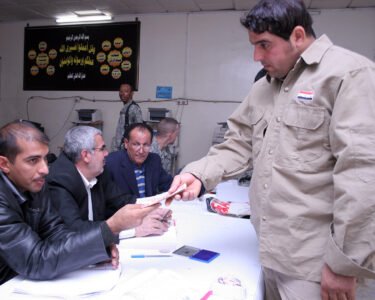
Photo: FEMA - 37138 - Federal airport workers in California by Adam Dubrowa, Public domain