
 By
Jordan is positioning its renewable energy sector as a wider engine of investment and job creation, with priorities spanning green hydrogen, ammonia, sustainable manufacturing and water infrastructure, according to International Finance. The Jordan-EU Investment Summit, held at the Dead Sea on November 19, brought together government officials, European institutions and businesses to discuss financing the transition.
At the summit, Jordan presented investment opportunities worth about USD 15 billion across energy, transport and logistics, the digital economy, manufacturing and water security, International Finance reported. Renewables now account for more than 27% of Jordan’s electricity mix, and the government wants to raise that share to 40% by 2035 while expanding storage and upgrading the grid.
The employment gap behind the investment headlines
The Economic Modernisation Vision, launched in 2022, aims to unlock 41 billion Jordanian dinars (USD 57.9 billion) in investment and create one million jobs by 2033. Green industries are expected to contribute to both goals, according to Shada El-Sharif, founder and chief executive of SustainMENA.
Yet a study cited by Jordan’s state news agency found that more than 80% of surveyed graduates had not secured energy-sector jobs, highlighting a mismatch between training and employer needs. For HR teams in Jordan, this is the central tension: capital is being mobilised, but the talent pipeline is not yet producing people with the skills those projects will require.
Experts expect demand to grow in hydrogen, storage, industrial efficiency, smart buildings and recycling. Employers that start workforce planning now, rather than waiting for projects to reach financial close, will be better placed to recruit.
What the project pipeline means for hiring timelines
Several projects have dates attached that payroll and HR leaders can use for planning. The planned USD 1 billion green ammonia facility in Aqaba is expected to reach financial close in 2027 and begin commercial operations in 2030, producing 100,000 tons per year. Jordan’s Energy Sector Strategy for 2025-2035 envisages commercial green hydrogen production beginning in 2030, with annual output reaching 500,000 tonnes by 2035.
The Aqaba-Amman water desalination and conveyance project has attracted USD 6.7 billion in funding, according to Reuters. It is designed to deliver an additional 300 million cubic metres of water annually, using desalination powered by dedicated solar energy and grid electricity, and is expected eventually to serve about 40% of Jordan’s population.
| Project or target | Key date | Workforce implication |
|---|---|---|
| Aqaba green ammonia facility | Financial close 2027, operations 2030 | Specialist chemical and process engineering roles |
| Commercial green hydrogen production | Start 2030, 500,000 tonnes by 2035 | Hydrogen technicians, safety and logistics staff |
| 40% renewables in electricity | By 2035 | Grid engineers, storage and maintenance technicians |
| Electric vehicles at 60% of new sales | Strategy target | EV servicing, charging infrastructure and fleet roles |
Payroll and compliance considerations for new green employers
Jordan’s banking sector is working to develop frameworks to channel capital toward sustainable activities, including a national green taxonomy to identify eligible projects and enhance transparency. For payroll teams, this matters because project financing conditions can affect how roles are structured, whether positions are funded through grants, loans or public-private partnerships, and what reporting employers must provide.
Businesses have called for faster approvals, regulation that is predictable and financing arrangements that make large projects financially viable, International Finance reported. Updated National Green Growth Action Plans covering energy, transport, agriculture, water, tourism and waste are intended to translate policy into projects and attract private participation.
Employers entering these sectors should confirm with Jordanian authorities how any new green investment incentives interact with existing social security, income tax and work permit rules. The sources reviewed do not specify payroll or tax changes tied to the green economy push, so HR teams should treat current obligations as unchanged until official guidance says otherwise.
Skills planning should start before financial close
The 80% graduate mismatch figure is the most actionable data point for HR leaders. Waiting until 2027 or 2030 to recruit for hydrogen, ammonia and desalination roles would mean competing for a very small pool of qualified candidates. The strategy also targets energy savings of 15% against 2023 levels and wider use of solar water heaters in homes, hospitals and hotels nationwide, which will create installation and maintenance work across the country rather than only in industrial zones.
The government also wants to make Jordan a base for low-carbon manufacturing, with opportunities including clean-tech components, industrial storage and energy efficient production. For HR teams, this suggests demand will spread beyond engineers to production supervisors, quality control staff, logistics coordinators and administrative roles that support manufacturing operations.
A practical step is to map current workforce skills against the sectors named in the National Green Growth Action Plans and identify where internal training could close gaps before external hiring becomes necessary. Employers that build relationships with Jordanian universities and technical colleges now may influence curriculum development and gain earlier access to graduates.
Sources: internationalfinance, Arab News
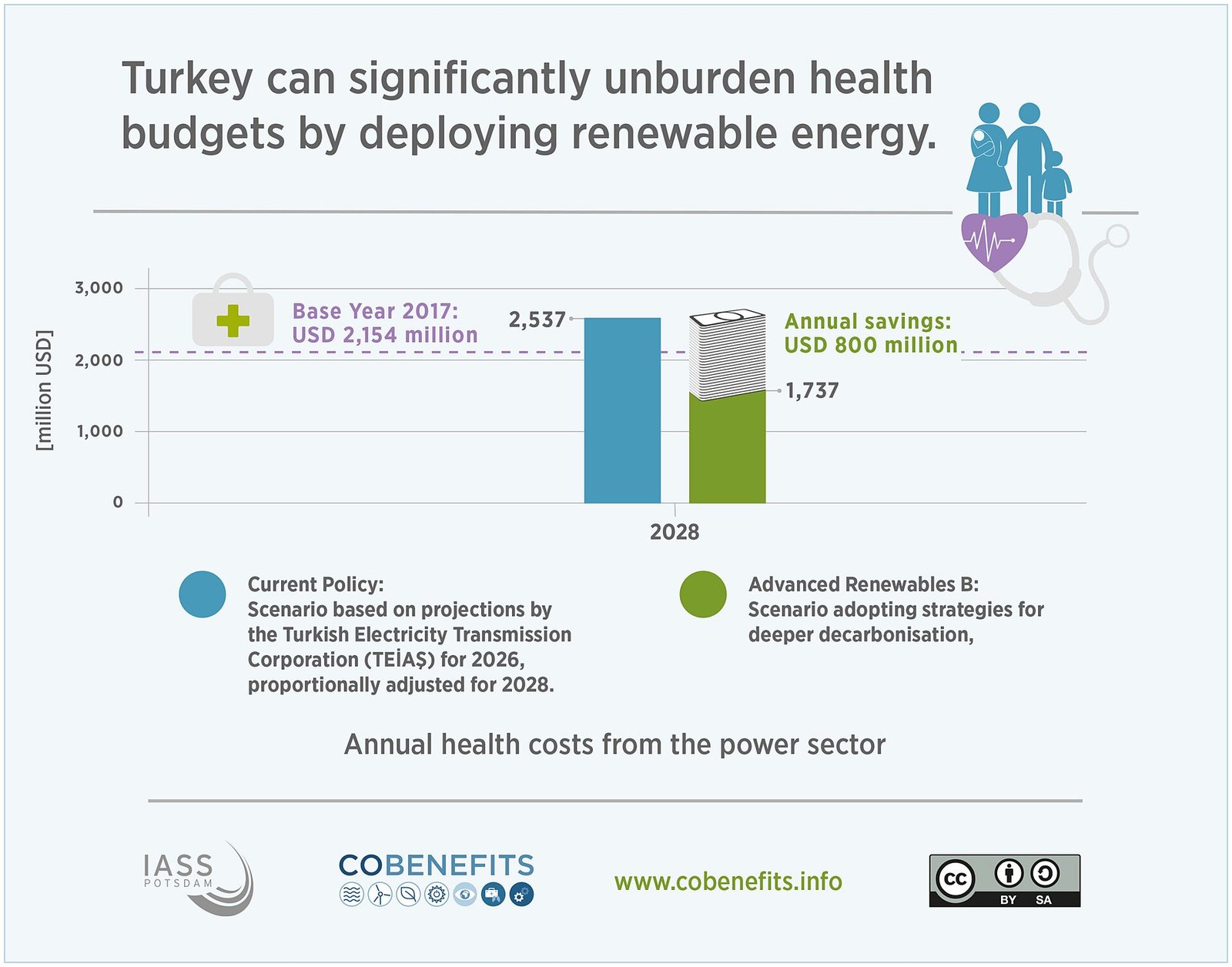
Photo: Renewable energy reduces health costs in Turkey by The project “Mobilising the Co-Benefits of Climate Change Mi, CC BY-SA 4.0