 By
The U.S. Supreme Court declined to review Merritt v. Texas Farm Bureau on Oct. 13, leaving in place a Fifth Circuit ruling that an employer owed no overtime pay to a misclassified worker because it did not know he was working overtime, according to HRMorning.
Jerry Merritt managed a team of insurance agents for Texas Farm Bureau from 2016 to 2018. Like all agency managers at the company, he was classified as an independent contractor. He set his own schedule, was not paid hourly, and did not track or report his hours. His commissions ranged from $552,000 to $627,000 a year. A district court ruled Merritt should have been classified as an employee and was owed at least 816 hours of overtime. But a jury then found the company did not know or have reason to know he worked those hours. The Fifth Circuit upheld that verdict, holding that failing to track hours does not, by itself, show an employer knew about overtime.
The Supreme Court’s denial of review sets no national rule. The Fifth Circuit ruling remains binding only within that circuit, which covers Texas, Louisiana, and Mississippi.
What the FLSA actually requires for overtime liability
The Fair Labor Standards Act requires overtime pay under 29 U.S.C. § 207 for employees who work more than 40 hours in a workweek. The statute defines “employ” to include “suffer or permit to work” under 29 U.S.C. § 203(g). Department of Labor regulations at 29 C.F.R. § 785.11 through 785.13 explain that work not requested but suffered or permitted is still work time when the employer knows or has reason to believe the work is being performed.
The key distinction is between actual knowledge and constructive knowledge. Actual knowledge means the employer directly knew the employee was working overtime. Constructive knowledge, sometimes called “reason to know,” means the employer should have discovered the overtime through reasonable diligence. The Fifth Circuit’s holding in Merritt focuses on actual knowledge: the employer did not know about the overtime hours, and the absence of a timekeeping system alone did not prove otherwise.
This matters because employer knowledge affects not just liability but also the statute of limitations. Under 29 U.S.C. § 255, a willful FLSA violation extends the limitations period from two years to three years. Willfulness often turns on whether the employer knew or showed reckless disregard for whether its conduct violated the FLSA.
Why the cert denial is not a national ruling
A Supreme Court denial of certiorari is not a decision on the merits. It does not affirm the Fifth Circuit, does not endorse its reasoning, and does not bind other circuits. It simply means fewer than four justices voted to hear the case.
The practical effect is geographic. Employers in Texas, Louisiana, and Mississippi now have clearer precedent that a lack of timekeeping alone will not establish employer knowledge of overtime. Employers elsewhere remain subject to their own circuit’s case law. Some circuits have taken a broader view of constructive knowledge, finding that an employer’s failure to maintain accurate records can support an inference that it knew or should have known about overtime work.
The denial also leaves workers in the Fifth Circuit with a narrower path to overtime recovery when they were misclassified and did not report hours. A worker who can show the employer actually knew about the overtime, through emails, manager observations, or other evidence, may still recover. But the worker cannot rely solely on the employer’s failure to track time.

Practical steps for HR and payroll teams
The safest practice remains tracking hours for all nonexempt employees, even those paid on a salary or commission basis. A timekeeping system creates a record that protects both the employer and the worker. It also reduces the risk of a later dispute over what the employer knew.
Classification audits should review job duties against the FLSA duties tests for executive, administrative, professional, outside sales, and computer employee exemptions. The fact that a worker is labeled an independent contractor or exempt does not control. Courts look at the actual working relationship and the actual duties performed.
Managers should be trained that off-the-clock work must be reported and paid. An employer cannot avoid overtime liability by instructing employees not to work overtime and then looking the other way. The “suffer or permit” standard means that if the employer knows or has reason to know the work is happening, the time is compensable.
For payroll teams, the practical takeaway is to treat classification as a legal question that requires periodic review, not a one-time decision. Changes in job duties, reporting lines, or compensation structure can change the analysis.
State law caveats
State overtime and misclassification laws may impose different standards. California and New York, for example, have their own wage and hour rules that can be stricter than the FLSA in certain respects. Employers should confirm the rules for their own state rather than assuming the Fifth Circuit’s approach applies. A cert denial in a federal case does not preempt state law protections.
Frequently asked questions
Does this ruling mean employers can avoid overtime pay by claiming ignorance?
No. The ruling holds that a lack of a timekeeping system alone does not prove knowledge. Employers who actually know about overtime work, or who have reason to know through reasonable diligence, can still be liable. Ignorance that results from a deliberate failure to inquire may support a finding of constructive knowledge in many circuits.
What should a worker do if they believe they were misclassified?
A worker should document their actual hours worked, their job duties, and any communications showing the employer knew about the work. They should also be aware of the FLSA statute of limitations, which is two years generally and three years for willful violations. State law may provide additional remedies.
Does this affect employers outside Texas, Louisiana, and Mississippi?
The Fifth Circuit ruling is binding only in those three states. Employers elsewhere should follow their own circuit’s case law and, where applicable, state wage and hour rules. The Supreme Court’s denial does not change the law in any other jurisdiction.
Sources: HRMorning
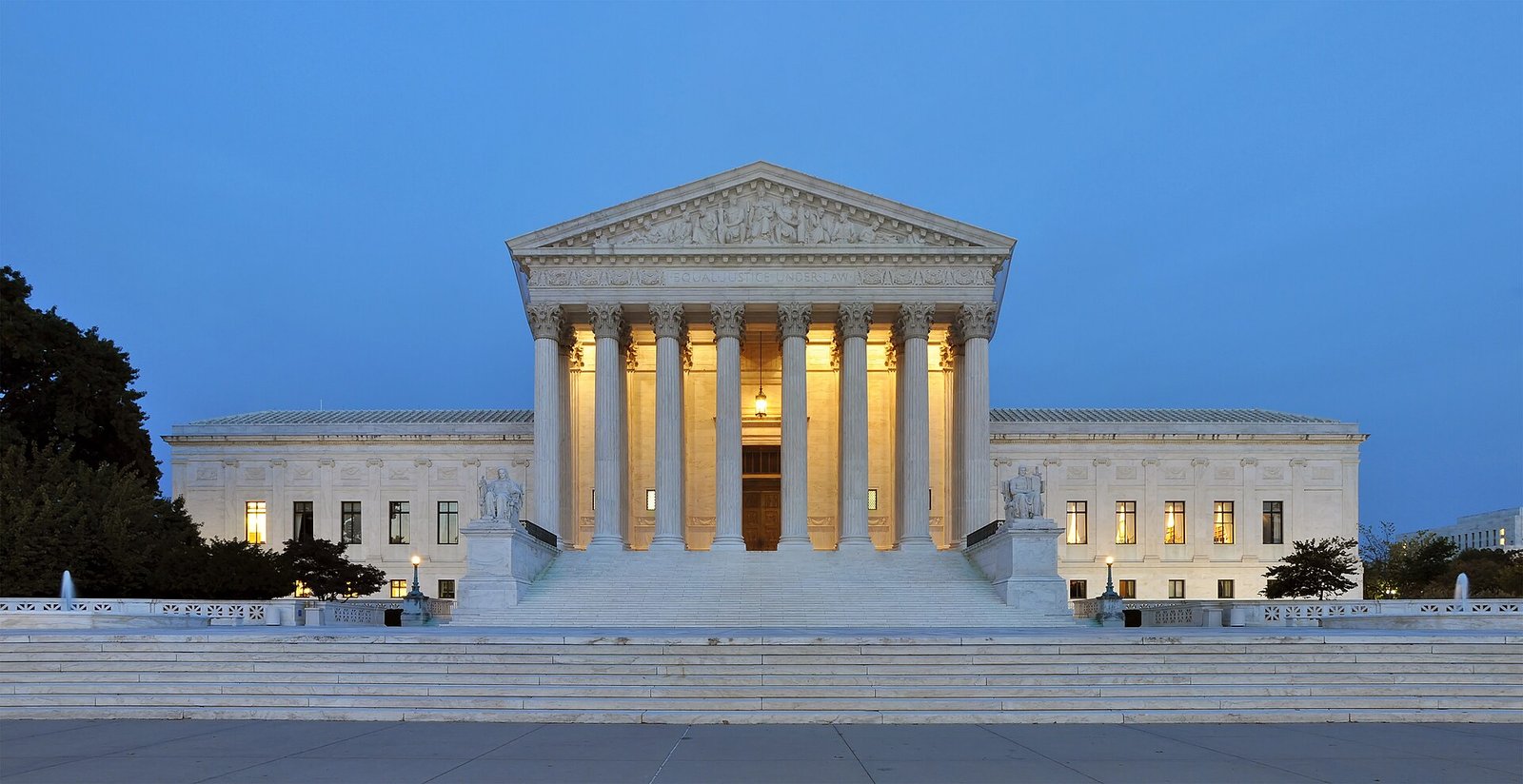
Photo: Panorama of United States Supreme Court Building at Dusk by Joe Ravi, CC BY-SA 3.0