 By
The Delhi Directorate of Education (DoE) has proposed replacing the per-day payment system for guest teachers in government schools with fixed monthly remuneration, according to HRKatha. The proposal would calculate pay based on basic salary plus dearness allowance at 60 percent of basic pay, bringing compensation closer to that of regular staff while retaining the contractual nature of the roles.
The plan covers postgraduate teachers, trained graduate teachers, primary teachers, educational and vocational guidance counsellors, and miscellaneous teachers. It also introduces eight days of casual leave per financial year on a pro rata basis, with excess absence deducted at one thirtieth of monthly pay per day. Guest teachers engaged before summer or winter vacations would continue receiving fixed monthly remuneration during those periods. House rent allowance and other benefits would not be included. The proposal has not yet been formally implemented.
What the proposal changes in practice
The shift from per-day to monthly pay affects how guest teachers are compensated during periods when schools are closed. Under a daily wage model, teachers typically receive payment only for days worked, which means vacations, holidays and unexpected closures reduce income. The proposed monthly structure, with vacation pay continuity, creates a more predictable income stream.
The dearness allowance component is significant because it links pay to inflation adjustments. At 60 percent of basic pay, DA forms a substantial portion of the proposed remuneration. The proposal states DA would be updated periodically in line with government notifications, which means the monthly figure would not remain static.
The leave provision is also a departure from typical daily wage arrangements. Eight days of casual leave per financial year, calculated pro rata for partial-year engagements, gives guest teachers a limited but defined entitlement. The deduction formula of one thirtieth of monthly pay per excess absence day provides a clear payroll calculation method.
How this compares with regular teacher pay
Regular teachers in Delhi government schools receive pay under established pay scales with full dearness allowance, house rent allowance, pension contributions and other benefits. Guest teachers under the proposal would receive basic pay plus DA only, with no house rent allowance or other benefits. This means the gap between guest and regular teacher compensation narrows but does not close.
The proposal recognises contractual status while moving toward pay parity. For payroll teams, the practical effect is a shift from calculating daily attendance-based payments to processing a fixed monthly amount with defined deduction rules. The one thirtieth deduction formula simplifies calculations compared with daily rate systems, where partial days and holidays create ambiguity.
What remains unclear
The source does not state the current daily rate for Delhi guest teachers, the proposed basic pay figures for each category, or how many guest teachers would be affected. It also does not specify which authority must approve the proposal or when implementation might occur. Guest teacher associations have historically sought regularisation and pay parity, but the source does not include any union response to this proposal.
Readers should confirm the current status with the Delhi Directorate of Education directly, as proposals of this nature can change during approval. The absence of house rent allowance and other benefits means guest teachers would still lack several components of regular teacher compensation even if the proposal is implemented.
| Element | Current per-day system | Proposed monthly system |
|---|---|---|
| Pay basis | Daily rate for days worked | Basic pay plus DA at 60 percent |
| Vacation pay | Not specified | Fixed pay continues during summer and winter vacations if engaged before them |
| Casual leave | Not specified | Eight days per financial year, pro rata |
| Excess absence | Not specified | Deduction of one thirtieth of monthly pay per day |
| House rent allowance | Not specified | Not entitled |
What payroll and HR teams should watch
For HR and payroll professionals managing guest teacher engagements, the proposal introduces several operational considerations. The monthly pay structure requires a different attendance tracking approach, particularly around the casual leave entitlement and the deduction formula. The pro rata calculation for casual leave means payroll systems must handle partial-year engagements accurately.
The vacation pay provision requires clear rules about what constitutes engagement before a vacation period. Schools will need to determine eligibility criteria and document engagement status before each vacation to process payments correctly. The DA component also requires payroll systems to accommodate periodic updates when government notifications change the rate.
The proposal does not address regularisation or permanent status for guest teachers. Readers asking whether guest teachers can become permanent should note that this proposal concerns pay structure only, not employment status. Vacancy information and recruitment processes are separate matters handled through DoE notifications.
Sources: HRKatha
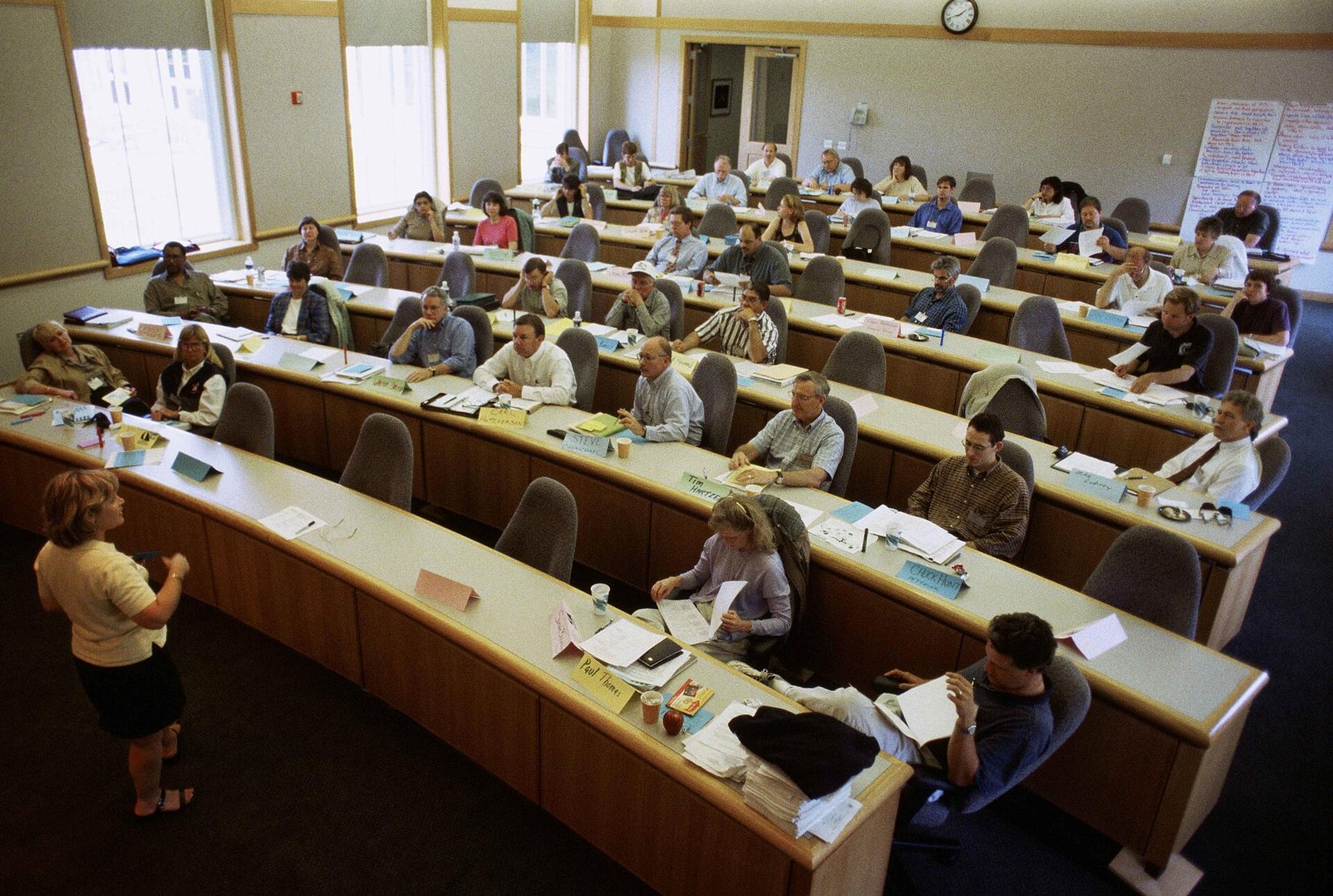
Photo: Classroom people with teacher by Ryan Hagerty, Public domain