 By
Barclays expects to cut around 5,000 jobs by the end of 2026 as it expands its use of artificial intelligence, according to HR Grapevine. The figure includes 1,000 posts already removed and represents about 5% of the bank’s global workforce.
The report, published on 23 October 2026 by Liam Soutar, links the reductions directly to Barclays’ growing deployment of AI. No named executive or spokesperson is quoted in the available text, and no specific locations are stated beyond the global workforce figure.
What the 5,000 figure actually tells HR teams
The 5,000 number is a net reduction target, not necessarily a count of individual redundancies announced on a single day. The fact that 1,000 posts have already been removed suggests the programme is underway and that the remaining 4,000 reductions will be spread across the period to the end of 2026.
For UK HR and payroll readers, the absence of named locations matters. Barclays has a substantial UK workforce alongside operations in the US, India and other English-speaking markets. A “global workforce” figure of roughly 100,000 employees, implied by the 5% calculation, does not tell a payroll manager in London or Glasgow how many UK roles are affected. Employers with Barclays as a client or partner should not assume the cuts are evenly distributed.
The timing also matters for payroll cycles. Redundancy payments in the UK are subject to statutory and contractual rules, and a phased programme ending in late 2026 means payroll teams may need to process exit payments across multiple tax years. That has implications for income tax, National Insurance and pension contributions.
AI expansion is not the same as AI replacement
The HR Grapevine report links the cuts to AI expansion, but it does not specify which roles or functions are affected. In banking, AI deployment typically concentrates in back-office and operational areas: transaction monitoring, fraud detection, customer service automation, code generation and document processing.
That distinction is important for HR readers. A bank expanding AI use may eliminate some roles while creating others in data science, model risk management and AI governance. The 5,000 figure is a net reduction, meaning gross job losses could be higher, offset by new hires elsewhere. Without a breakdown from Barclays, the headline number should be read as a workforce planning signal rather than a precise map of which teams will shrink.
UK employers watching this story should note that redundancy consultation obligations under the Trade Union and Labour Relations (Consolidation) Act 1992 apply when 20 or more employees are proposed for redundancy at one establishment within 90 days. A phased global programme may trigger consultation duties at different sites at different times. HR teams should confirm the rules for their own situation rather than relying on general reporting.

What this signals for banking employment
Barclays is not the first large bank to link job reductions to AI. Peer institutions have made similar announcements in recent years, typically framing cuts as part of broader cost-saving programmes. The absence of direct quotes from Barclays executives in the HR Grapevine report leaves open the question of whether AI is the primary driver or one factor among several.
For HR managers in financial services, the practical takeaway is that AI-related restructuring is now a recurring workforce planning event, not a one-off. That means job descriptions, skills frameworks and redundancy selection criteria need to account for automation risk. It also means retraining and redeployment programmes should be designed before cuts are announced, not after.
Payroll teams should prepare for a higher volume of exit payments, including payments in lieu of notice, holiday pay and any enhanced redundancy terms. In the UK, the first £30,000 of a genuine redundancy payment is tax-free, but payments above that threshold are taxable. Getting the classification right matters for both the employer and the departing employee.
| Aspect | Detail from report | What remains unclear |
|---|---|---|
| Job cuts | Around 5,000 by end of 2026 | Which divisions or countries |
| Already removed | 1,000 posts | When and where those cuts occurred |
| Workforce share | About 5% globally | UK-specific percentage |
| Cause | AI expansion | Which AI systems or processes |
| Timeline | End of 2026 | Phasing and consultation dates |
Practical steps for HR and payroll teams
The first step is to avoid treating the 5,000 figure as a confirmed UK number. Barclays has not, in the available reporting, broken down the cuts by country or business unit. HR teams inside Barclays will be working through consultation and selection processes; teams outside Barclays should treat the announcement as an industry signal rather than a direct operational instruction.
Second, review redundancy policies and payroll processes now. A phased programme ending in 2026 means exit payments may span multiple tax years. UK payroll teams should confirm the tax treatment of each payment type and ensure that statutory redundancy pay, contractual redundancy pay and notice pay are calculated separately where required.
Third, consider the workforce planning implications. If AI is reducing headcount in operational roles, the remaining workforce will need different skills. HR teams should map which roles are most exposed to automation and build redeployment pathways before cuts are announced. That is easier to do when the organisation has a clear view of its skills inventory.
The Barclays announcement is a news event, but for HR and payroll readers it is also a planning prompt. The bank has given a number and a deadline. The operational detail that matters to payroll cycles, consultation duties and skills planning has yet to emerge.
Sources: HR Grapevine
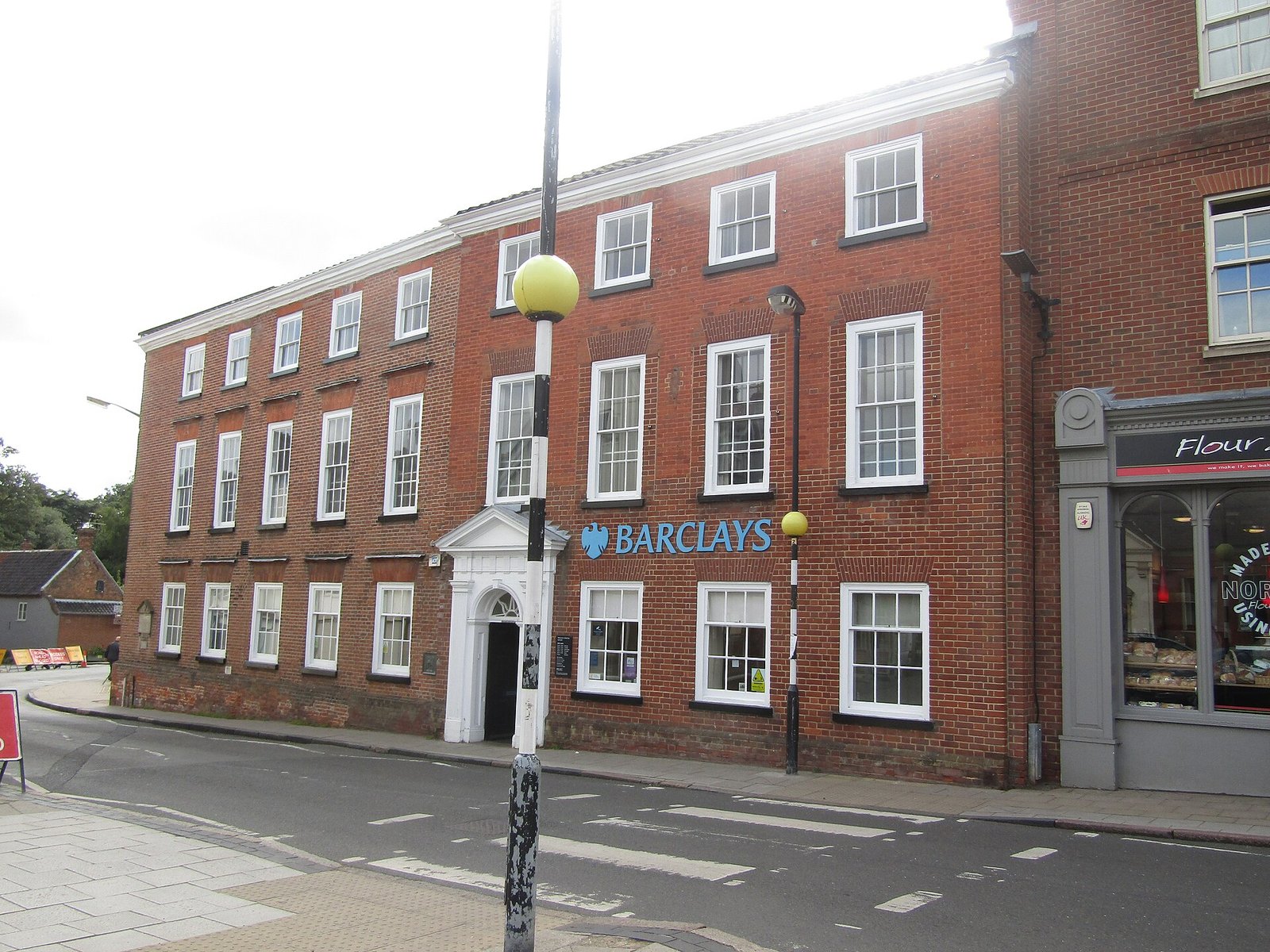
Photo: -2019-09-19 Barclays Bank, Market Place, Aylsham by Kolforn (Kolforn) I'd appreciate if you could mail me (K, CC BY-SA 4.0