 By
The Ministry of Labour is continuing intensive inspection campaigns across economic sectors in the capital and governorates to identify non-Jordanian workers violating the provisions of the Labour Law, according to Jordan News. Inspection teams conduct daily visits in both the morning and evening, including on weekends, and are equipped with cameras to document enforcement operations through audio and video recordings.
Abdul Halim Dujan, Secretary-General of the Ministry of Labour, urged employers across all sectors to take advantage of the legalisation and status-regularisation period for non-Jordanian workers approved by the Cabinet. The period ends on December 1, and effective January 1, 2027, an “expulsion” flag will be added to the Ministry of Labour’s electronic systems for every worker who has failed to regularise their status before the deadline.
What the legalisation window offers employers
The Cabinet-approved measure creates a temporary amnesty with three financial components. Employers can secure a 50 percent reduction in work permit fees for each previous year for non-Jordanian workers, including domestic workers. Fines imposed by the Ministries of Labour and Interior are fully exempted. For non-Jordanians who entered the Kingdom for tourism, education or medical treatment and remained without work permits throughout their stay, a lump sum of JD 500 covering all previous years allows them to obtain a work permit.
For HR and payroll teams, this means the cost of regularising an undocumented worker is now materially lower than the cost of being caught employing one. The inspection campaign is active, documented with cameras, and runs outside normal working hours, so the exposure window for non-compliance has narrowed considerably.
How the enforcement timeline works in practice
The sequence matters for workforce planning. The legalisation period ends on December 1. That is the operational deadline for any employer who wants to bring a non-Jordanian worker into compliance under the reduced-fee terms. The January 1, 2027 date is different: it is when the Ministry of Labour’s electronic systems will automatically flag workers who failed to regularise before the deadline, with an “expulsion” marker attached to their records.
Employers should not conflate the two dates. Waiting until late 2026 to address an undocumented worker will not help if the legalisation window closed in December 2025. The 2027 date is an enforcement trigger, not an extension of the amnesty.
| Date | What happens | HR action |
|---|---|---|
| Now to December 1 | Legalisation and status-regularisation period open | Identify undocumented workers, calculate reduced fees, file applications |
| December 1 | Amnesty window closes | Deadline for applications under reduced-fee terms |
| January 1, 2027 | Expulsion flag added to Ministry electronic systems | Workers not regularised before December 1 are flagged |
What this means for payroll and hiring teams
Payroll teams in Jordan should treat the December 1 deadline as a hard stop for any worker whose status is currently irregular. The inspection teams are visiting workplaces daily, including weekends, and recording enforcement operations. That creates a direct risk for employers who continue to pay undocumented workers after the amnesty ends.
Hiring managers should also review onboarding procedures for non-Jordanian candidates. The JD 500 lump sum route applies to people who entered for tourism, education or medical treatment and stayed without permits. If a candidate falls into that category, the cost of regularisation is fixed and known, which makes it easier to decide whether to proceed with an offer before the deadline.
The Ministry of Labour has not published details on how the expulsion flag will interact with other government systems, such as those operated by the Ministry of Interior. Employers should confirm with the Ministry of Labour or a Jordanian legal adviser how a flagged worker’s status affects their ability to remain in the country, transfer sponsorship, or re-enter on a future visa.
Common mistakes to avoid before December 1
The first mistake is assuming the inspection campaign is temporary. The Ministry has described it as continuing and intensive, with daily morning and evening visits including weekends. Employers who delay regularisation on the assumption that enforcement will ease are taking a direct compliance risk.
The second mistake is treating the fee reduction as optional. The 50 percent reduction applies to work permit fees for each previous year, and the fine exemption covers both Labour and Interior Ministry fines. For a worker who has been undocumented for several years, the cumulative savings can be substantial. Employers should calculate the full cost of regularisation now, while the reduced terms apply, rather than facing the full fee schedule and potential fines after December 1.
A third issue is documentation. The inspection teams are recording enforcement operations with audio and video. Employers should keep their own records of any regularisation applications filed, including dates and reference numbers, so they can demonstrate good faith if an inspection occurs while an application is pending.
The Ministry of Labour has not stated whether applications submitted before December 1 but processed after that date will still qualify for the reduced fees. Employers should seek written confirmation from the Ministry on this point if their application is likely to be delayed.
Sources: Jordan News
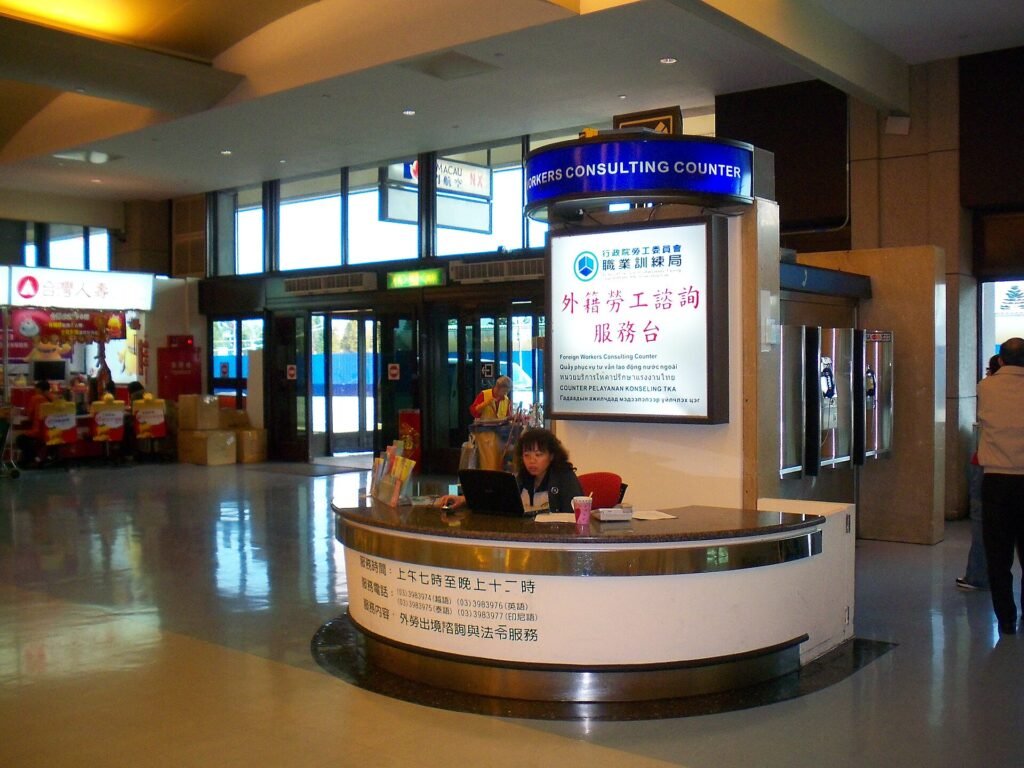
Photo: Nakano Labour Standards Inspection Office(Nakano, Nagano) by Suikotei, CC BY-SA 4.0