 By
Nama Water Services has achieved 100 per cent Omanisation and created 1,188 permanent job opportunities for Omani nationals through training-linked employment initiatives, according to the Times of Oman. The announcement was made from Muscat and reported on Saturday 07 November 2026.
The job opportunities were rolled out in three phases: 479 jobs in the first phase, 406 in the second, and 303 in the third. Selection and evaluation procedures for applicants under the third phase are currently underway. Taqi bin Mohammed al Lawati, CEO of Human Resources and Culture at Nama Water Services, said the company follows an integrated approach to employee development through professional qualifications, specialised training and on-the-job learning.
What the 100 per cent figure covers
The headline figure refers to Omanisation within Nama Water Services itself, meaning the company’s direct workforce is now entirely made up of Omani nationals. The announcement also covers a separate but related metric: Omanisation in operation and maintenance contracts awarded to supporting companies increased from around 55 per cent to 90 per cent.
Engineer Abdullah bin Mohammed Al-Nuaimi, CEO of Operations and Maintenance at Nama Water Services, said the company has worked with supporting firms to link employment opportunities with specialised qualifications and operational requirements. He stressed that the programmes go beyond job creation by developing specialised national expertise in facility operations, network management and infrastructure maintenance, areas that have traditionally relied to varying degrees on expatriate skills.
How the training programmes work in practice
The 1,188 jobs did not appear as simple vacancies. They were created through structured programmes that combine training with a route into permanent employment.
The Ta’zeez programme provides graduates with one year of practical training and a financial allowance. This model gives employers a way to assess candidates over an extended period before committing to permanent contracts, while graduates earn an income and build relevant experience.
The Bridges programme annually accommodates more than 300 students from 18 educational institutions, representing 23 academic disciplines, with total training hours exceeding 126,000. The latest edition ran between June and August 2026 and hosted 355 students, including 100 trainees in Muscat Governorate.
The Progress programme has been delivered in four editions to develop national leadership capabilities. This sits alongside a partnership with Chinese firm HCIG, which provided specialised training for 100 employees across four groups. The HCIG training covered project management, design, planning, artificial intelligence, customer service, field visits to advanced water and wastewater treatment facilities, wastewater-to-energy technologies, and modern approaches to project and asset management.

What this means for HR and payroll teams
For HR managers in Oman, this announcement is a useful reference point for how large employers are structuring Omanisation beyond simple headcount targets. The phased approach, with 479, 406 and 303 jobs released in sequence, suggests a deliberate pipeline rather than a single recruitment drive.
Payroll teams should note the financial allowance attached to the Ta’zeez programme. Trainees receiving allowances are not necessarily on standard employment contracts, which affects how their payments are processed, whether social insurance contributions apply, and how the arrangement is documented. Employers running similar schemes should confirm the correct treatment with Oman’s Public Authority for Social Insurance and their own legal advisers, as the rules depend on the specific contractual status of each trainee.
The jump in contractor Omanisation from around 55 per cent to 90 per cent is also significant. Many employers in Oman focus Omanisation efforts on their direct headcount, but Nama Water Services has extended the requirement into its supply chain. HR teams managing vendor contracts may need to track Omanisation rates among contractors and supporting companies, not just within their own payroll.
Practical considerations for employers
The Nama Water Services model shows that training-linked employment can work at scale, but it requires coordination between HR, operations and finance. The company linked job creation to operational requirements, which means the roles were defined by what the business actually needed rather than by a standalone nationalisation target.
Al-Nuaimi said the initiatives are expanding career opportunities for young Omanis across the governorates, strengthening local content and enabling supporting companies to undertake more operational and technical responsibilities using national talent. This points to a broader shift: supporting companies are expected to absorb more technical work, and that work must be delivered by Omani nationals.
Employers considering a similar approach should map the full cost of training programmes, including allowances, supervision time and the productivity gap while trainees are learning. They should also plan for retention, since trained Omani staff with specialised skills may attract offers from competitors once their training is complete.
| Programme | Focus | Scale |
|---|---|---|
| Ta’zeez | One year practical training with financial allowance for graduates | Part of the 1,188 permanent jobs |
| Bridges | Student placements across 18 institutions and 23 disciplines | More than 300 students annually; 355 in 2026 edition |
| Progress | National leadership development | Four editions implemented |
| HCIG partnership | Technical training for employees | 100 employees across four groups |
What happens next
Selection and evaluation procedures for the third phase of the 1,188 jobs are still underway. Applicants who registered for the third phase should monitor official Nama Water Services channels for updates on their status. The company has not announced further phases beyond the 1,188 roles, and no additional targets have been published in the Times of Oman report.
The announcement aligns with Oman Vision 2040, the national development framework that prioritises building a skilled national workforce and reducing reliance on expatriate labour. Employers in other sectors may see similar pressure to move Omanisation requirements into their contractor and supplier relationships, not just their direct employment.
Sources: Times of Oman
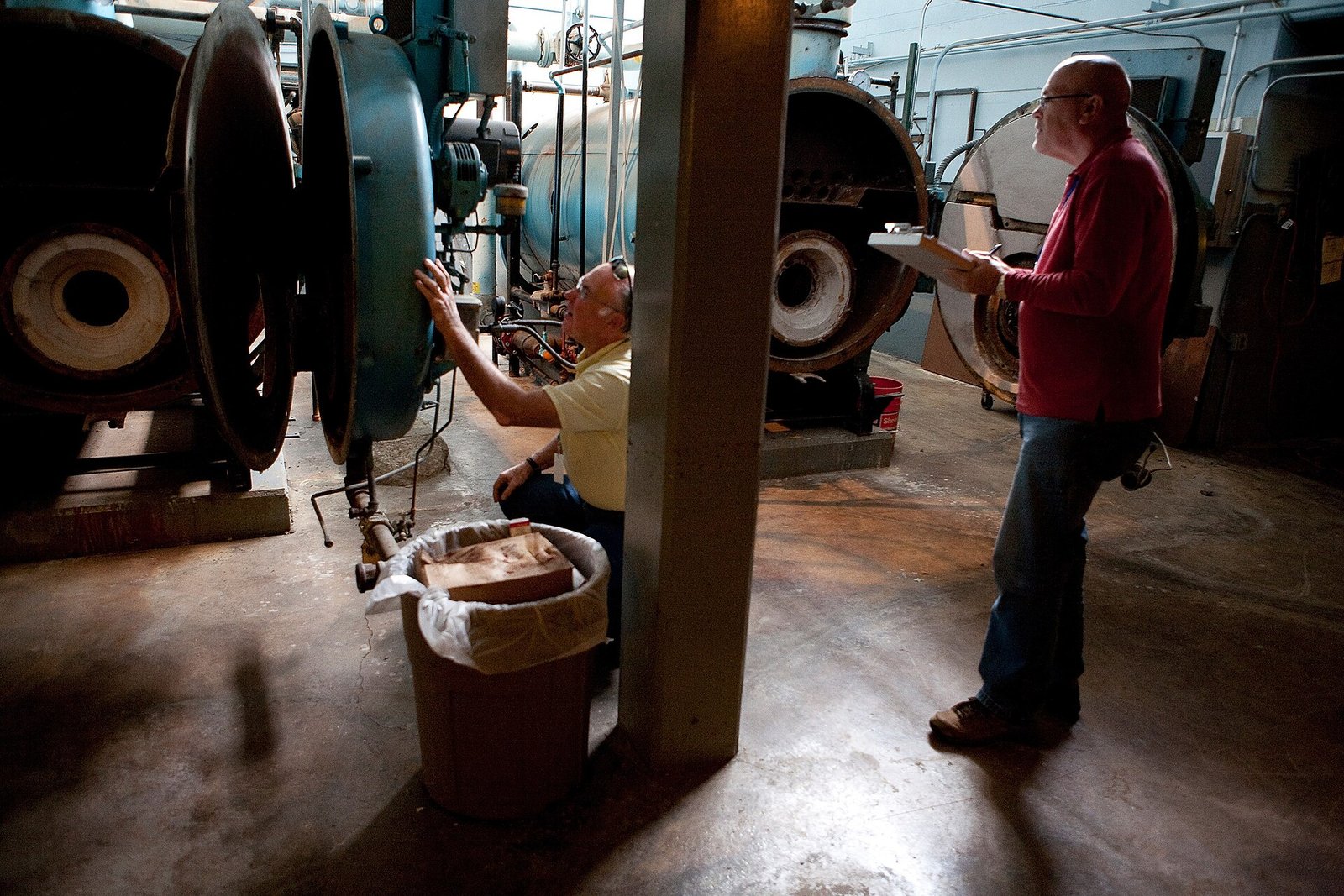
Photo: FEMA - 45349 - FEMA workers inspect a school for damage in Wisconsin by Ed Edahl, Public domain