 By
Brunei’s Coordinating Minister for Economic Policies and Minister of Economy, Trade and Industry, Dato Seri Setia Dr Abdul Manaf Metussin, urged the country to accelerate economic diversification by ensuring investments generate skilled jobs and higher exports. Speaking at the Brunei Business Conference 2026 in Bandar Seri Begawan on Monday, he said Brunei needed to adapt to “global uncertainties, shifting trade patterns, technological advances and the transition towards sustainability” to remain competitive, according to The Star.
The address, themed “Brunei’s Next Economy: Growth and New Engines of Opportunity”, highlighted that Brunei’s economy grew by an average of about 0.7 per cent annually between 2015 and 2025, while the non-oil and gas sector expanded by 2.7 per cent a year over the same period. The non-oil and gas share of GDP increased from 46 per cent to 54 per cent, and its share of total exports rose from 7 per cent to 60 per cent. The minister cautioned that data centre and AI projects “should contribute to the wider economy by supporting industrial development, improving productivity and building local capabilities, rather than being pursued solely for the investment value.”
What the investment pipeline looks like
The Brunei Economic Development Board’s tracked investment portfolio comprised 27 operating foreign and domestic projects as of August 2026, representing about USD6 billion in investment and employing more than 2,000 local workers. The minister named several projects as evidence of momentum: Hengyi’s planned USD5 billion Phase 2 expansion targeted to begin operations in 2029, Muara Port Company’s container terminal capacity expansion from 220,000 to 500,000 twenty-foot equivalent units by 2027, and UNN’s partnership with Vobile Inc. in the digital space.
A joint feasibility study is under way for the proposed Brunei-Singapore Agri-Tech Food Zone, and Envolve is working on an AI-powered Food Innovation Initiative. Priority sectors identified include downstream oil and gas, agri-food and fisheries, tourism, telecommunications, digital and creative media, transport and logistics, and advanced manufacturing. Green and blue economies, solar energy, sustainable manufacturing, waste management, aquaculture and seafood processing were named as additional growth areas.
Why the jobs gap persists
Investment inflows are rising, but conversion into local employment remains modest. The 27 tracked projects employing just over 2,000 local workers against USD6 billion in investment suggests a capital-intensive pattern. Downstream oil and gas projects such as Hengyi’s refinery and Phase 2 expansion are highly automated by nature. They generate export revenue and GDP contribution but relatively few direct jobs per dollar invested compared with services, agri-food processing or light manufacturing.
Brunei’s small domestic market, estimated at under half a million people, means job creation from investment depends heavily on export-oriented activity. The minister’s emphasis on exports is therefore not incidental. The non-oil and gas export share rising from 7 per cent to 60 per cent is a significant shift, but the underlying export base remains narrow. For HR and payroll teams, workforce planning cannot assume a steady pipeline of new roles from headline investment announcements. Each project must be assessed on its actual hiring profile, skill requirements and localisation commitments.
What HR and payroll leaders should watch
The minister’s call for investments to build local capabilities has direct consequences for employer practice. Companies receiving investment incentives or operating under Brunei Economic Development Board facilitation are likely to face increasing scrutiny on local hiring, training and technology transfer. The reference to data centres and AI projects contributing to local capability rather than being pursued solely for investment value signals a policy direction: incentive packages may become more conditional on measurable workforce outcomes.
Payroll teams should prepare for potential changes to incentive structures that tie benefits to employment targets. HR leaders in priority sectors should map current workforce skills against the capabilities named in the address: solar energy infrastructure, sustainable manufacturing, aquaculture and seafood processing, and digital media. The renewable energy target of at least 30 per cent of installed power generation capacity by 2035 creates a timeline for workforce development in solar installation, grid management and maintenance.
The Muara Port expansion, with turnaround time already reduced from 30.8 minutes to 11.6 minutes in 2025, points to growing demand for logistics, warehousing and port operations roles. The proposed Brunei-Singapore Agri-Tech Food Zone, if it proceeds beyond feasibility, would require agronomists, food safety specialists and processing technicians. None of these roles can be filled overnight, and Brunei’s existing education and training pipelines will need to align with these sectoral priorities.
Regional context and practical steps
Brunei operates within the BIMP-EAGA sub-regional grouping, which has a combined population of 75 million. The minister urged local businesses, particularly micro, small and medium-sized enterprises, to pursue regional partnerships and participate in wider value chains. For employers, workforce planning should account for cross-border mobility, regional supply chains and the possibility of serving markets beyond Brunei’s borders.
The corporate tax rate of 18.5 per cent and the allowance of up to 100 per cent foreign ownership, as previously promoted by Brunei’s Ministry of Finance and Economy, remain relevant context for investment decisions. However, the address suggests the policy conversation is shifting from attracting capital at any cost to ensuring capital produces measurable domestic benefits. HR and payroll leaders should monitor whether future incentive packages include explicit local employment quotas, training levies or export performance conditions.
The Brunei Economic Blueprint, launched in 2021, and Brunei Vision 2035’s third goal of a dynamic and sustainable economy provide the policy framework. The challenge for employers is to translate these national objectives into concrete workforce plans: identifying which priority sectors align with current capabilities, where skills gaps are most acute, and how quickly training programmes can be scaled. It also means engaging early with the Manpower Planning and Employment Council and JobCentre Brunei on recruitment pipelines for roles that do not yet exist in sufficient numbers.
The minister’s message is a signal that the era of passive investment promotion is ending. Employers that can demonstrate clear links between their investment, their hiring and their export contribution will be better positioned as Brunei’s incentive structures evolve.
Sources: The Star
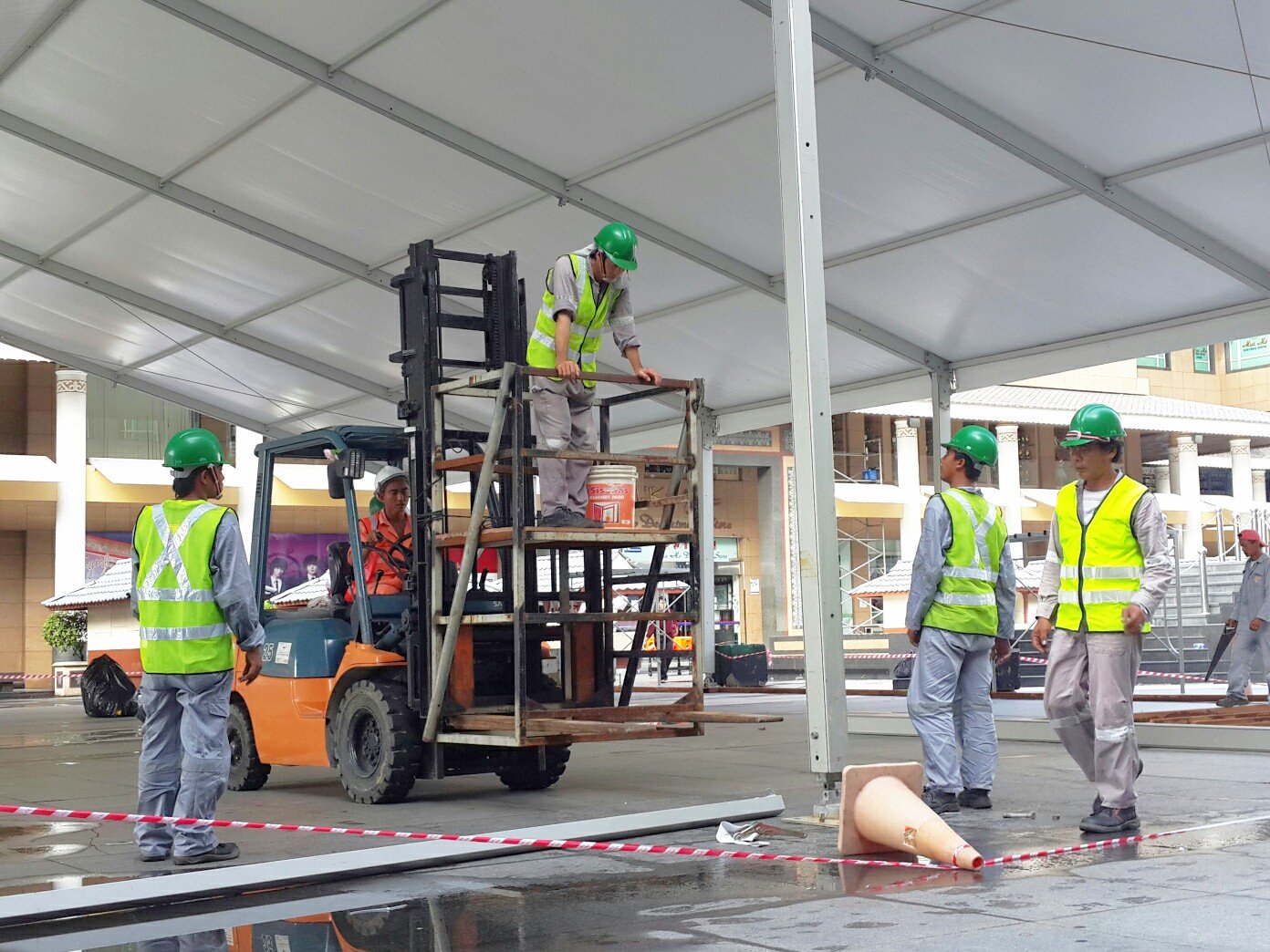
Photo: Filipino Men at Work in Brunei by User:Jpquidores, CC BY-SA 3.0