 By
Manpower Minister Yassierli has urged all labor union elements to jointly oversee implementation of the Manpower Protection Law, according to ANTARA News. He made the statement in Jakarta on Monday, framing the collaboration as a way to strengthen worker protection and support a fair, inclusive, productive, and competitive manpower ecosystem.
“For the next stage, I invite all labor union elements to jointly oversee the implementation of this latest Manpower Law in the field,” Yassierli said. He added that the government appreciates the active contribution of labor union colleagues in overseeing the birth of the new law. The House of Representatives passed the Manpower Protection Law during a plenary session on Oct. 6, 2026.
What the law is and where it came from
The Manpower Protection Law originated as a DPR initiative and followed Constitutional Court Decision No. 168/PUU-XXI/2023, which reviewed the manpower cluster of the Job Creation Law, often called the Omnibus Law. That decision pushed the government and legislature to revisit labor rules that unions had challenged for years.
The new law sits alongside Law No. 13 of 2003 on Manpower and the Job Creation Law. The exact relationship between the three instruments is not fully detailed in the available reporting. What is clear is that the Manpower Protection Law is intended to address worker protection gaps that unions and the Constitutional Court identified in the Omnibus Law’s labor provisions. Employers should treat it as a separate legislative instrument until implementing regulations clarify how it interacts with existing rules.
What union oversight means in practice
The minister’s call for unions to oversee implementation does not, on its own, create a formal enforcement power. The available reporting does not specify whether unions will sit on joint monitoring committees, participate in workplace inspections, or operate complaint channels. Yassierli’s statement is an invitation to collaborate, not a description of a statutory mechanism.
That distinction matters for HR teams. Union representatives may become more active in raising compliance questions during implementation. Employers with existing collective labor agreements or bipartite cooperation bodies should expect the law’s rollout to feature in those discussions. The ministry expressed hope that harmonious, dynamic, and fair industrial relations will be sustained through continuous dialogue among the government, labor unions, and business owners.
Yassierli gave the directions at the 7th National Congress of the Chemical, Energy, Mining, Oil, Natural Gas, and General Workers Unions of the Indonesian Workers Union Confederation in Jakarta on Sunday, October 25, 2026. The venue signals that sectoral unions with large memberships in extractive and energy industries are a priority audience for the implementation message.
What HR and payroll teams should watch
The reporting does not yet provide article-level detail on wages, outsourcing, fixed-term contracts, severance, social security, or termination procedures under the new law. That means the immediate compliance picture is incomplete. HR teams should not assume that existing policies under Law No. 13 of 2003 and the Job Creation Law remain unchanged.
The practical steps available now are procedural rather than substantive. First, identify which union federations represent employees in the company’s sector and location. Second, monitor the ministry’s official channels for implementing regulations, which typically follow Indonesian labor laws within months of enactment. Third, review employment contracts, outsourcing arrangements, and termination procedures against the new law once the official text is published. Fourth, prepare for union representatives to raise questions about implementation in bipartite meetings.
Payroll teams should pay particular attention to any changes in wage calculation, overtime, or severance formulas. The Constitutional Court decision that preceded this law addressed the manpower cluster broadly, and the new law may adjust provisions that payroll systems currently encode.
What remains unknown
Several important details are not yet available in the reporting. The law’s formal number has not been stated. The President’s signature status is not confirmed. No implementing regulations have been named. No penalties or transition periods have been specified. No employer association reaction, such as from Apindo, has been reported.
The minister’s statement that building a fair, inclusive, productive, and sustainable manpower ecosystem remains a major task requiring broad collaboration across sectors suggests that the government sees implementation as a phased process rather than a single enactment event. “We have a big duty to build an inclusive, productive, and sustainable manpower ecosystem. I am sure that with the spirit of collaboration and the Red and White spirit, we can achieve this together,” Yassierli said.
For employers, the sensible posture is to treat the law as enacted but not yet operational in detail. Union oversight is likely to begin with dialogue and information sharing before any formal enforcement mechanism takes shape. HR teams should document current practices now so that any changes required by implementing regulations can be measured against a clear baseline.
Sources: ANTARA News
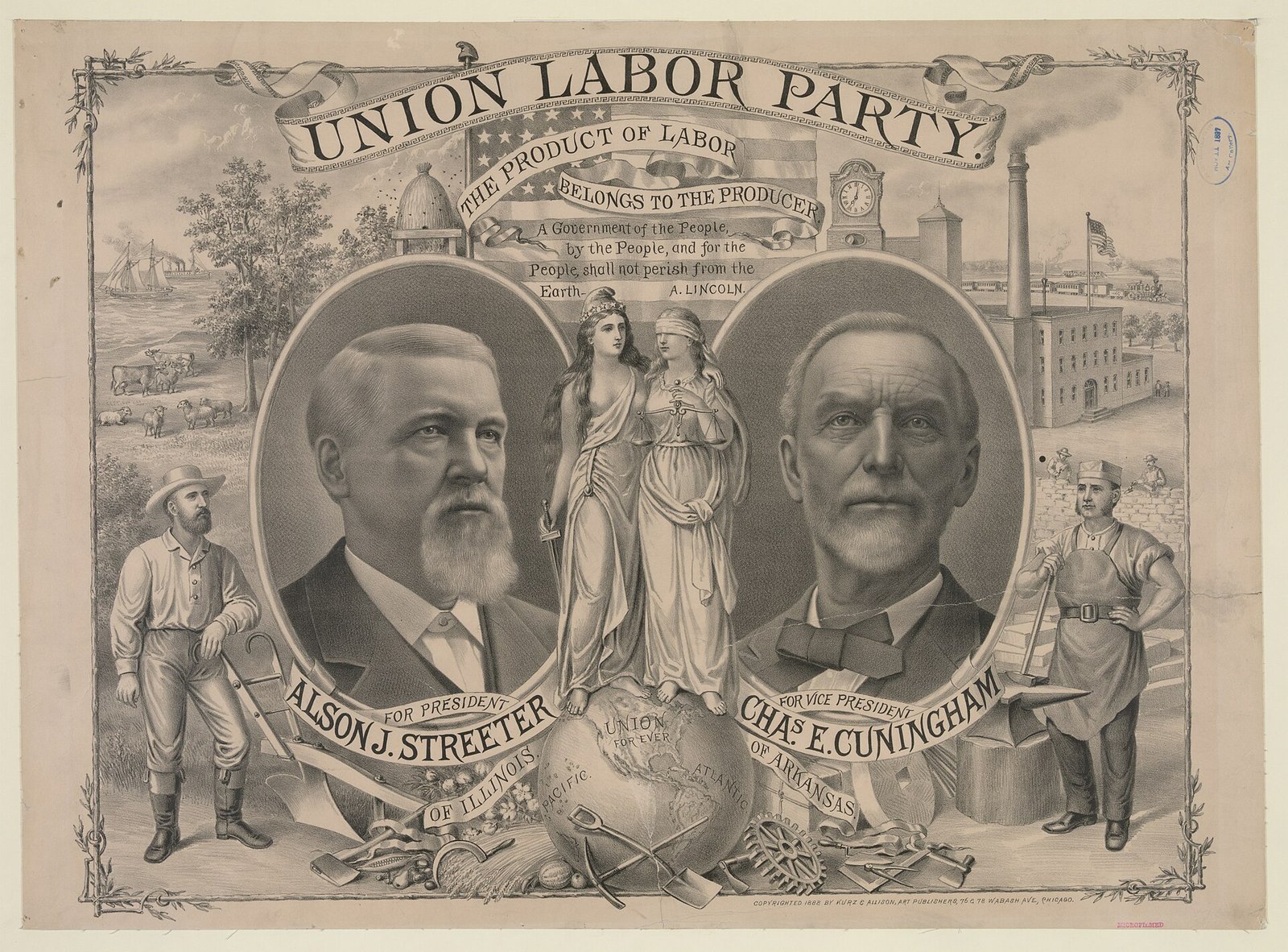
Photo: Union labor party LCCN2003656923 by Popular Graphic Arts, Public domain