 By
Akasa Air has increased salaries for pilots across all eight grades by up to 15%, with the revised pay structure taking effect from January 1, 2027, according to an internal memo reviewed by ET and reported by ETHRWorld on October 29, 2026. The fixed monthly salaries will rise for every pilot category, from first officers to designated examiners.
A spokesperson for Akasa Air did not respond to queries on the announcement, ETHRWorld reported. The airline, backed by the late Rakesh Jhunjhunwala’s family, Azim Premji’s family office and Ranjan Pai’s family office, operates a fleet of 45 aircraft and inducted its 14th aircraft of the year a day before the report was published.
Why the hike matters for pilot retention
The salary increase is a retention measure at a moment when Indian carriers are preparing for significant fleet expansion. ETHRWorld reported that IndiGo, Air India Express and Akasa are set to induct over 100 planes starting next year, despite high fuel prices affecting growth. Airline executives said they will try to hold onto pilots and recruit new ones because training takes time.
The training pipeline explains the urgency. Trainee first officers need six months of training before becoming first officers. First officers need a minimum of 1,500 hours before they are eligible for upgrade to captain, and individual airlines can set higher limits. DGCA regulations require airlines to maintain three sets of pilots, including one captain and one first officer per aircraft. For IndiGo, the requirement becomes more than double because of high aircraft utilisation.
Akasa Air plans to add eight more aircraft by the end of this fiscal year, with 181 more planes on order. That expansion cannot happen without enough qualified pilots, and the January 2027 pay revision signals that the airline is locking in its existing cockpit crew before competitors ramp up hiring.
What the salary structure covers
The announcement confirms fixed monthly salaries are increasing across all eight pilot grades. The source material does not provide a grade-by-grade breakdown of the percentage increases, nor does it state current base salaries or post-hike figures in rupees. The 15% figure is a ceiling, not a uniform raise. Readers should treat any specific salary numbers circulating elsewhere as unverified unless Akasa Air publishes an official pay table.
The hike applies to fixed monthly pay. The report does not specify whether flying allowances, layover pay or other variable components are changing. For payroll teams, this matters because Indian pilot compensation typically combines a fixed component with hourly flying allowances and other variables. A 15% increase on base pay does not translate to a 15% increase in total take-home pay.
How this fits Akasa Air’s recent trajectory
Akasa Air resumed pilot hiring in February 2026 after a pause of nearly 18 months, according to jobs.scopehr.in. At that time the airline operated 32 aircraft and expected to add two more by the end of February 2026, taking the fleet to 34. CEO Vinay Dube said the airline employed around 750 pilots operating a fleet of 33 aircraft, calling it a healthy pilot-to-aircraft ratio by industry standards. The same page noted the airline was preparing for a potential initial public offering.
The previous year, Akasa Air had close to 800 pilots but still experienced flight cancellations and DGCA compliance-related issues, which highlighted gaps between staffing levels and operational readiness. The January 2027 salary hike should be read against that background: the airline is now growing its fleet, rebuilding its pilot pipeline and trying to avoid a repeat of operational disruptions.
For HR and payroll leaders, the takeaway is that pilot compensation in India is becoming more competitive as fleet expansion accelerates. Airlines that wait until they face attrition may find themselves paying more later, or worse, cancelling flights because they lack qualified crew.
What remains unclear
The source material leaves several questions unanswered. Akasa Air has not published a full salary table showing current and revised pay for each of the eight pilot grades. It has not said whether the hike applies to new hires, existing pilots, or both. It has not explained what determines whether a pilot receives 5%, 10% or 15%. And it has not compared its new pay scales with IndiGo, Air India Express or other Indian carriers.
The fleet size discrepancy in earlier reporting, where one page cited 32 aircraft and another quoted the CEO citing 33, has been overtaken by the October 2026 figure of 45 aircraft. Payroll teams should rely on the latest official fleet numbers when calculating pilot-to-aircraft ratios.
Sources: ETHRWorld
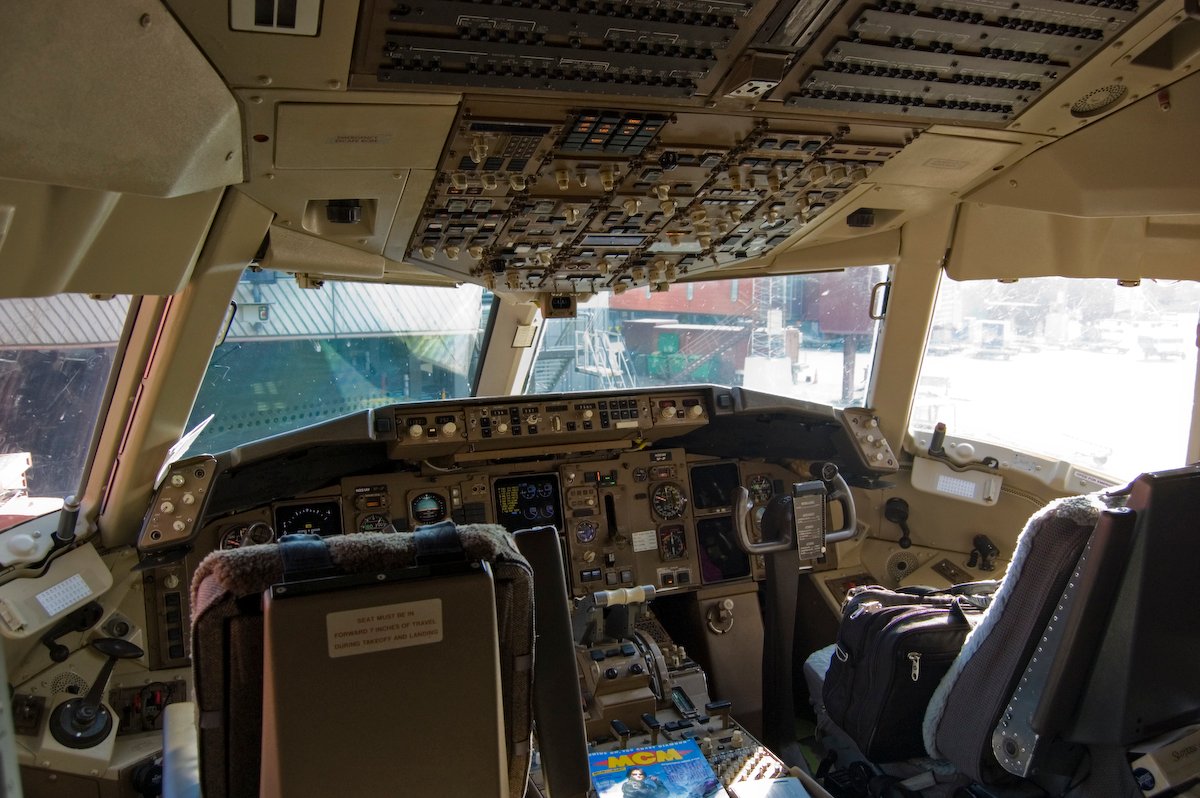
Photo: 767 Airplane cockpit by Lipton sale at English Wikipedia, CC BY 3.0