 By
The International Labour Organization has warned that rising temperatures and workplace heat stress are already affecting workers, productivity and economies in Sri Lanka and the Maldives, with consequences set to intensify substantially in the coming decades, according to The Island.
New ILO studies, reported by the Sri Lankan outlet on 31 October 2026, project that by 2040 reduced working time from rising heat stress will equal around 147,000 full-time jobs across the two countries combined under a low-emissions pathway. The Maldives accounts for approximately 2,400 of those lost full-time job equivalents, with GDP losses projected at around USD 576 million against a 1985-2014 historical baseline.
Joni Simpson, ILO Country Director for Sri Lanka and the Maldives, said: “These findings make clear that heat stress is already affecting workers, enterprises and economies in Sri Lanka and the Maldives. Protecting workers from heat stress needs to be part of how we approach occupational safety and health, climate adaptation and economic resilience. Through social dialogue, governments, employers and workers can develop practical solutions that protect health and livelihoods, while sustaining productive enterprises.”
What the ILO studies actually measured
The research compares current and projected working time losses against a historical reference period of 1985-2014. The 2023 data already shows additional losses of working time and GDP in both countries compared with that baseline, meaning the problem is not a future hypothetical but a measurable present condition.
The studies were commissioned by the ILO with support from the Climate Vulnerable Forum and the Vulnerable 20 Finance Ministers, funded through the CVF-V20 Joint Multi-Donor Fund. They form part of a six-country research initiative that also covers Ethiopia, Ghana, Lebanon and Senegal. The Maldives findings sit within a broader body of evidence on how heat affects labour supply in climate-vulnerable economies, but the country-specific figures are the ones that matter for local employers and payroll teams.
The sectoral breakdown is significant for workforce planning. In the Maldives, services and construction are hardest hit. That matters because tourism, hospitality, transport and building work dominate private employment, and many of those roles involve outdoor or semi-outdoor exposure, long shifts and physical exertion.
What this means for Maldivian HR and payroll teams
The ILO’s practical recommendations translate directly into HR policy decisions. Adjusting working hours to avoid the hottest periods, introducing work-rest cycles, providing shade, hydration and cooling facilities, and strengthening workplace heat monitoring are all measures that employers can implement without waiting for new legislation.
For payroll, the implications are more subtle. If shifts move earlier or later to avoid peak heat, timekeeping systems, overtime calculations and allowances may need review. Workers who cannot reduce hours without losing essential income will need social protection or employer-supported income smoothing, the studies note. That raises questions about how partial hours, rest breaks and heat-related absence are recorded and paid.
The Maldives does not currently have a dedicated national heat stress standard for workplaces, and employers should confirm the current position with the Ministry of Economic Development and Trade or their own legal advisers before changing contracts or shift patterns. The ILO’s call for heat stress protection to be integrated into occupational safety and health frameworks suggests regulatory development may follow, but no implementation dates were stated in the report.
Practical steps employers can take now
The studies identify measures that are low-cost and immediately actionable. Adjusting working hours is the most direct intervention, particularly for construction crews and outdoor service roles. Work-rest cycles should be formalised so that supervisors cannot override them under production pressure. Hydration and shade are basic infrastructure questions, not optional extras.
Heat monitoring deserves more attention than it typically receives in Maldivian workplaces. Simple wet-bulb globe temperature readings, or at minimum scheduled checks against published heat indices, can trigger pre-agreed changes to work patterns. The point is to remove discretion and make heat management a routine operational matter.
Awareness of heat-related risks is also flagged. Many workers and supervisors may not recognise early symptoms of heat strain, and in a service-heavy economy the pressure to keep working through discomfort is real. Training should cover recognition, response and the right to stop work in dangerous conditions without penalty.
The economic context for employers
The projected GDP loss of USD 576 million for the Maldives by 2040 is not an abstract national figure. It represents reduced output, lower productivity and constrained labour supply across the sectors that employ most Maldivian workers. For individual businesses, heat stress shows up as higher turnover, more absenteeism, slower work rates and increased accident risk.
The comparison with Sri Lanka, where agriculture dominates the losses, highlights how different the Maldivian exposure is. There is no large agricultural workforce to absorb the impact. The concentration in services and construction means tourism operators, resorts, transport companies and building firms carry the direct burden.
Employers that act early on heat management may see retention and productivity advantages as conditions worsen. Those that treat it as a future problem risk absorbing the costs through operational disruption and, potentially, future compliance obligations.
What remains unclear
The ILO report does not specify next steps or implementation dates. It recommends integrating heat stress protection into occupational safety and health, climate adaptation and economic resilience through social dialogue, but there is no stated timeline for regulatory change in the Maldives. Employers should monitor announcements from the Ministry of Economic Development and Trade and the Labour Relations Authority, and review their own practices against the ILO’s recommended measures in the meantime.
Sources: The Island
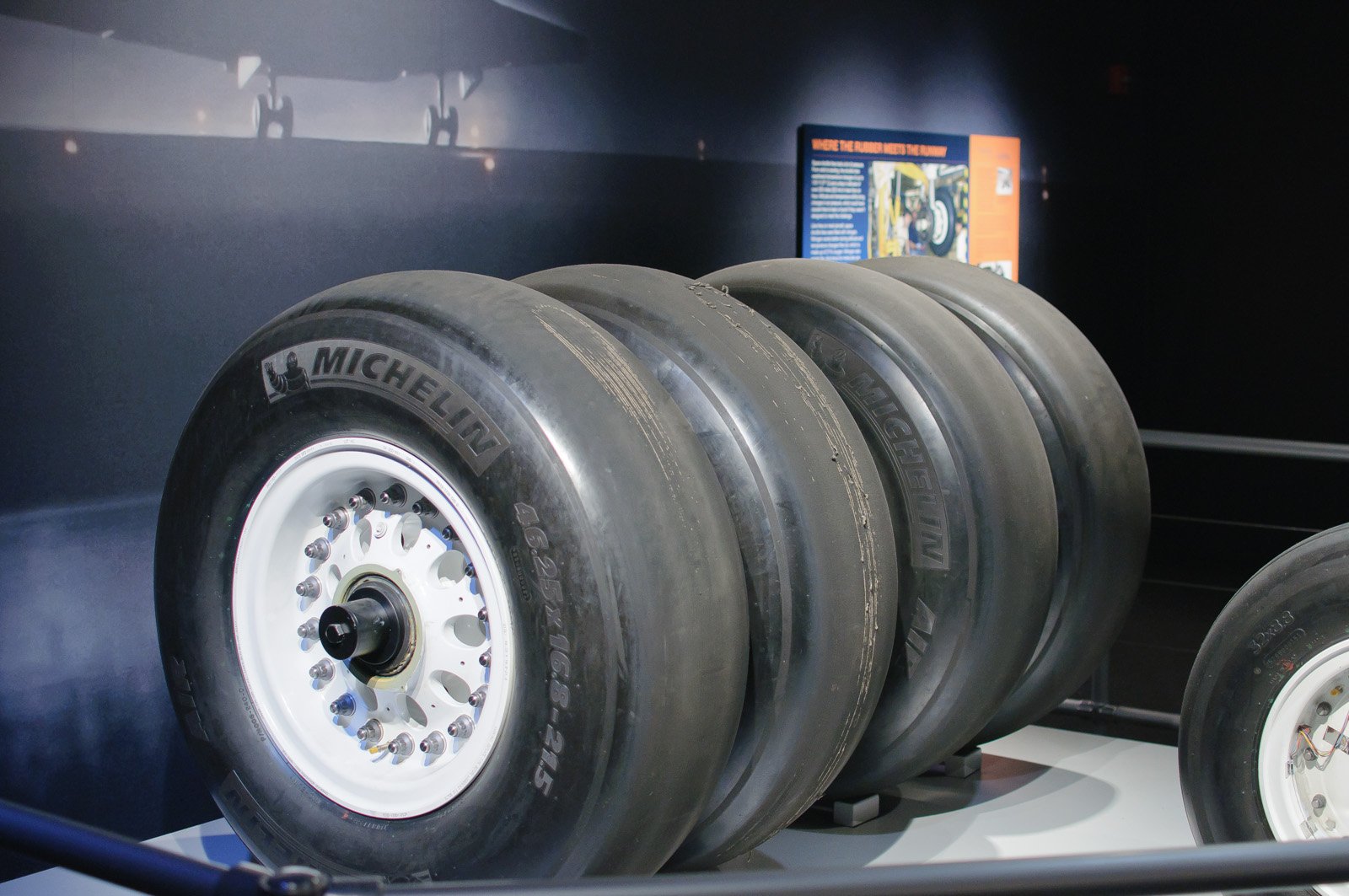
Photo: Space Shuttle Endeavour at California Science Center (8256170909) by InSapphoWeTrust from Los Angeles, California, USA, CC BY-SA 2.0