 By
The Union Cabinet has approved a 3 percentage point increase in dearness allowance for central government employees and dearness relief for pensioners, raising both from 60 percent to 63 percent of basic pay, according to HRKatha. The revision was announced on October 28 and applies retrospectively from July 1, 2026, ahead of Diwali.
Around 48 lakh central government employees and 68 lakh pensioners are expected to benefit from the change. Dearness allowance and dearness relief are revised twice a year, typically in January and July, using a formula established under the Seventh Pay Commission and based on the Consumer Price Index for Industrial Workers, published monthly by the Labour Bureau under the Ministry of Labour and Employment.
What the new rate means in practice
Dearness allowance is paid to serving central government employees as a percentage of basic pay. Dearness relief is the equivalent payment for pensioners, calculated on the basic pension. The two terms describe the same inflation compensation mechanism applied to different groups.
The retrospective effective date means employees and pensioners will receive arrears for the period from July 1, 2026, to the month in which the revised rate is actually paid. Arrears are calculated as the difference between the old rate of 60 percent and the new rate of 63 percent for each month in that window. The payment typically appears in the salary or pension cycle that follows the issue of the formal government order.
A simple illustration helps. An employee with a basic pay of Rs 30,000 per month would see dearness allowance rise from Rs 18,000 to Rs 18,900, an increase of Rs 900 per month. For a pensioner with a basic pension of Rs 20,000, dearness relief would rise from Rs 12,000 to Rs 12,600.
How the DA rate is calculated
The dearness allowance rate is derived from the 12-month average of the All India Consumer Price Index for Industrial Workers, known as AICPI-IW. The Labour Bureau publishes this index monthly. The Seventh Pay Commission formula converts the movement in that average into a percentage of basic pay.
The calculation works by taking the average AICPI-IW for the relevant 12-month period, subtracting the base index value, dividing by the base value, and multiplying by 100. The result is the DA percentage. The government does not publish the full working for each revision, but the formula is the established basis for the twice-yearly adjustments.
The rate history cited by an employee union letter shows the progression: 46 percent in July 2023, 50 percent in January 2024, 53 percent in July 2024, 55 percent in January 2025, 58 percent in July 2025, 60 percent in January 2026, and now 63 percent. The total increase since July 2023 is 17 percentage points.
The 50 percent threshold and linked allowances
A practical point that often goes unmentioned in news coverage is what happens when dearness allowance crosses 50 percent of basic pay. Under central government rules, several other allowances are revised automatically once DA reaches that level. House rent allowance, hostel subsidy, children education allowance, and transport allowance are among those linked to the DA rate.
The current rate of 63 percent is well above the 50 percent threshold, so these linked allowances have already been adjusted in earlier cycles. HR and payroll teams should ensure that any employee whose DA-linked allowances were last set before the threshold was crossed has been moved to the higher rates. This is a common source of payroll errors when DA revisions are processed manually.
What payroll teams should check
The retrospective effective date creates specific work for payroll administrators. The first step is to confirm the exact date on which the revised rate will be paid, which depends on the issue of the government order. The second is to calculate arrears for each month from July 1, 2026, to the payment month.
Payroll teams should also verify that the new rate is applied to the correct base. Dearness allowance is calculated on basic pay only, not on gross salary. For pensioners, dearness relief is calculated on the original basic pension, before any commutation.
State government employees should not assume this announcement applies to them. State governments set their own dearness allowance rates and announce revisions separately. Some states follow the central government’s timing and percentage, but others do not. HR teams in state government organisations should confirm the applicable rate with their own state finance department.
The next central revision is due from January 1, 2027, based on AICPI-IW data for the preceding months.
Sources: HRKatha
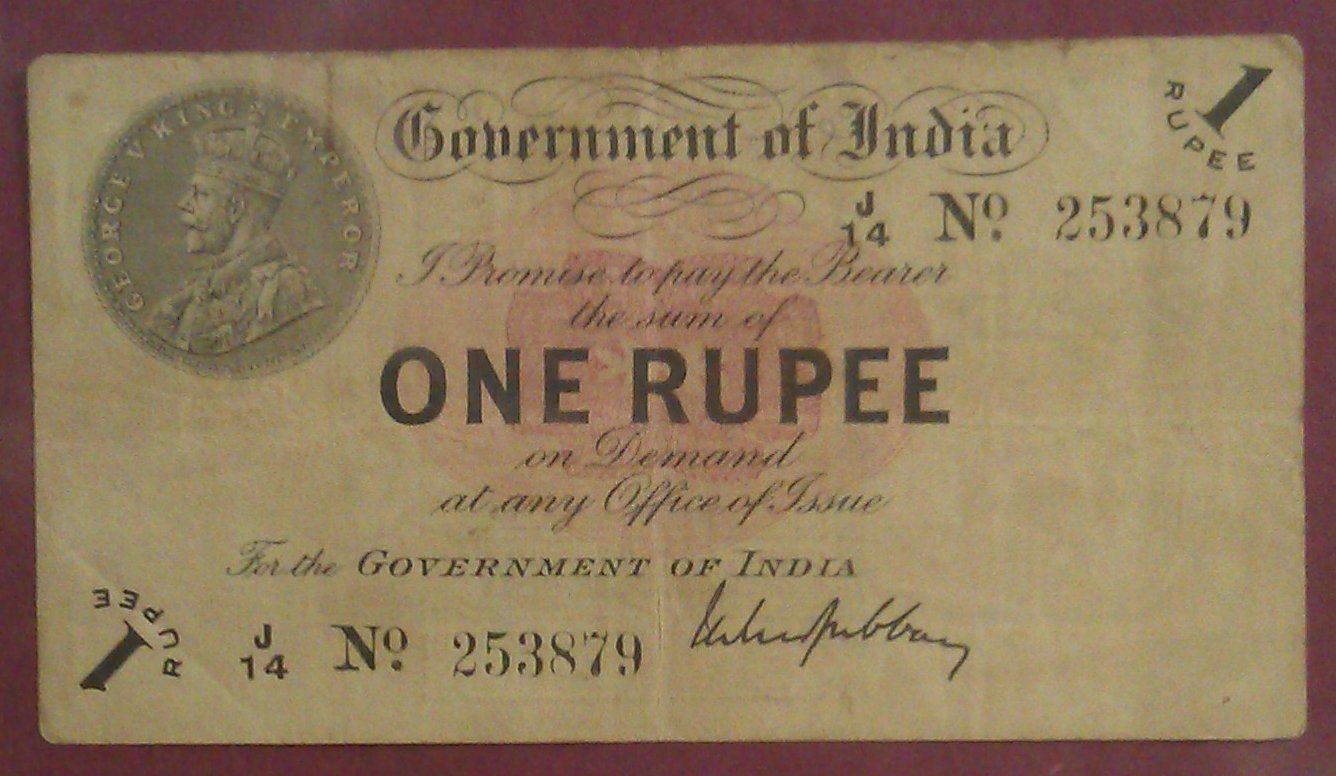
Photo: British India 1 Rupee by Government of India by Tanvir Rahman • Personal Website, Public domain