 By
Mauritius is commemorating the 192nd anniversary of the arrival of Indian indentured labourers on 2 November 2026, with official ceremonies and wreath-laying events at Aapravasi Ghat in Port Louis, according to Channel Africa. The site, a UNESCO World Heritage location, was where arrivals were historically landed and processed.
The commemoration marks the arrival of the first 36 indentured labourers from Kolkata, then called Calcutta, aboard the ship Atlas on 2 November 1834. They came on five-year contracts to work on sugar plantations following the abolition of slavery across the British Empire. Mauritians are observing a national public holiday on Monday to mark the occasion.
The earlier arrivals the anniversary does not always mention
The 1834 date is widely treated as the starting point of indentured migration to Mauritius, but Le Mauricien reports that Indian contractual labourers were introduced in small groups before that date. Historian Vijaya Teelock is quoted as saying that “uninterruptedly, the Indian contractual labourers were introduced in Mauritius in small groups at the requests of individual local planters.”
Le Mauricien identifies Immigrant Mahamod or Mohameth as the first Indian indentured worker under a labour contract, arriving on 23 January 1826 on board the Elizabeth from Calcutta. He was 45 years old, a Bengali Muslim from Birali, near Calcutta, recruited by Captain Gaston to work as the servant of Mr. Oliver, a British manager for Gaillardon’s Company at Pointe aux Piments Estate. By 1836 he was head servant in Captain West’s household at Vale Sugar Estate. In 1839 he purchased three arpents of land near present-day Grand Bay. By 1856, Mahamod, his two sons, and five grandsons bought 31 arpents of land near Vale Sugar Estate for 1,250 piastres. He died in 1876 at age 95, and his obituary was written by Captain West and published in Le Mauricien.
What the numbers show about scale and timing
Between January 1826 and July 1834, an estimated 2,251 Indian and Chinese indentured labourers arrived in Mauritius, according to Le Mauricien. Within that period, 802 Indian and 398 Chinese indentured labourers were introduced between June and October 1829 alone. The larger figure often cited is 462,801 estimated Indian and non-Indian indentured workers who reached Mauritius between 1826 and 1910. Channel Africa gives a different but overlapping figure of roughly 450,000 workers eventually brought from India, China, Madagascar, and other parts of Africa under the system.
The two sources frame the 2 November 1834 date differently. Channel Africa presents it as the arrival of the first indentured labourers from India. Le Mauricien documents earlier arrivals but treats the 1834 voyage as the start of the “ensuing massive introduction of contractual labourers” and the beginning of Britain’s “Great Experiment” in large-scale contract labour migration.
| Period or date | Event or figure | Source |
|---|---|---|
| 23 January 1826 | First recorded Indian indentured worker, Mahamod, arrives on the Elizabeth | Le Mauricien |
| January 1826 to July 1834 | 2,251 Indian and Chinese indentured labourers arrive | Le Mauricien |
| June to October 1829 | 802 Indian and 398 Chinese indentured labourers introduced | Le Mauricien |
| 2 November 1834 | First 36 indentured labourers from India arrive on the Atlas | Channel Africa |
| 1826 to 1910 | 462,801 indentured workers reach Mauritius | Le Mauricien |
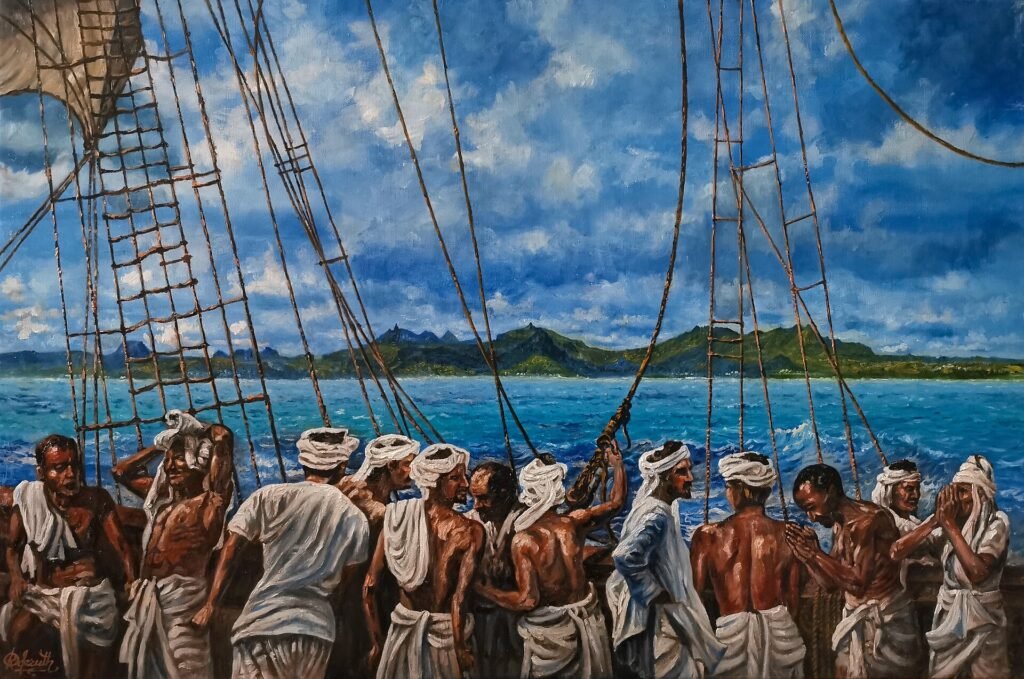
Oderuth, CC BY-SA 4.0
Why the distinction matters for employers and HR teams
The public holiday on Monday affects payroll and workforce planning in Mauritius. Employers with staff scheduled to work on the public holiday should confirm the applicable pay rules for public holiday work under Mauritian employment law, as rates and entitlements can vary by sector and collective agreement. HR and payroll teams should treat the day as a standard public holiday unless their own contracts or workplace agreements state otherwise.
The commemoration also carries weight for workplace diversity and inclusion practice. Descendants of indentured labourers make up the majority of the nation’s population, according to Channel Africa. For HR teams, the anniversary is a reminder that employee records, leave calendars and internal communications should recognise the cultural significance of 2 November. Organisations with staff who observe the day may receive requests for leave or flexible working around the ceremonies at Aapravasi Ghat.
The contract labour system behind the commemoration
The indentured system that began in Mauritius was not uniform. Le Mauricien reports that from January 1826 to December 1842, importation of indentured labourers was a private initiative controlled and funded by Franco-Mauritian, British, Free Coloured and Indian planters, traders, negociants, and landowners. Earlier “Articles of Agreement” contracts ran for two to four years, shorter than the five-year contracts introduced with the 1834 arrivals.
The early workforce was more diverse than the anniversary sometimes suggests. Le Mauricien notes that early contractual workers came from Bombay, Pondicherry, Tranquebar, Madras, Singapore, and Penang, as well as Calcutta. The system drew on Indian and Chinese labourers, and later workers from Madagascar and other parts of Africa.
For HR and payroll readers, the historical record offers a concrete example of how contract terms, recruitment channels, and workforce composition evolved under pressure from employers. The shift from shorter “Articles of Agreement” to five-year contracts, and from small private arrangements to a large-scale system, mirrors modern debates about fixed-term contracts, recruitment intermediaries, and employer obligations to migrant workers.
Sources: Channel Africa, lemauricien
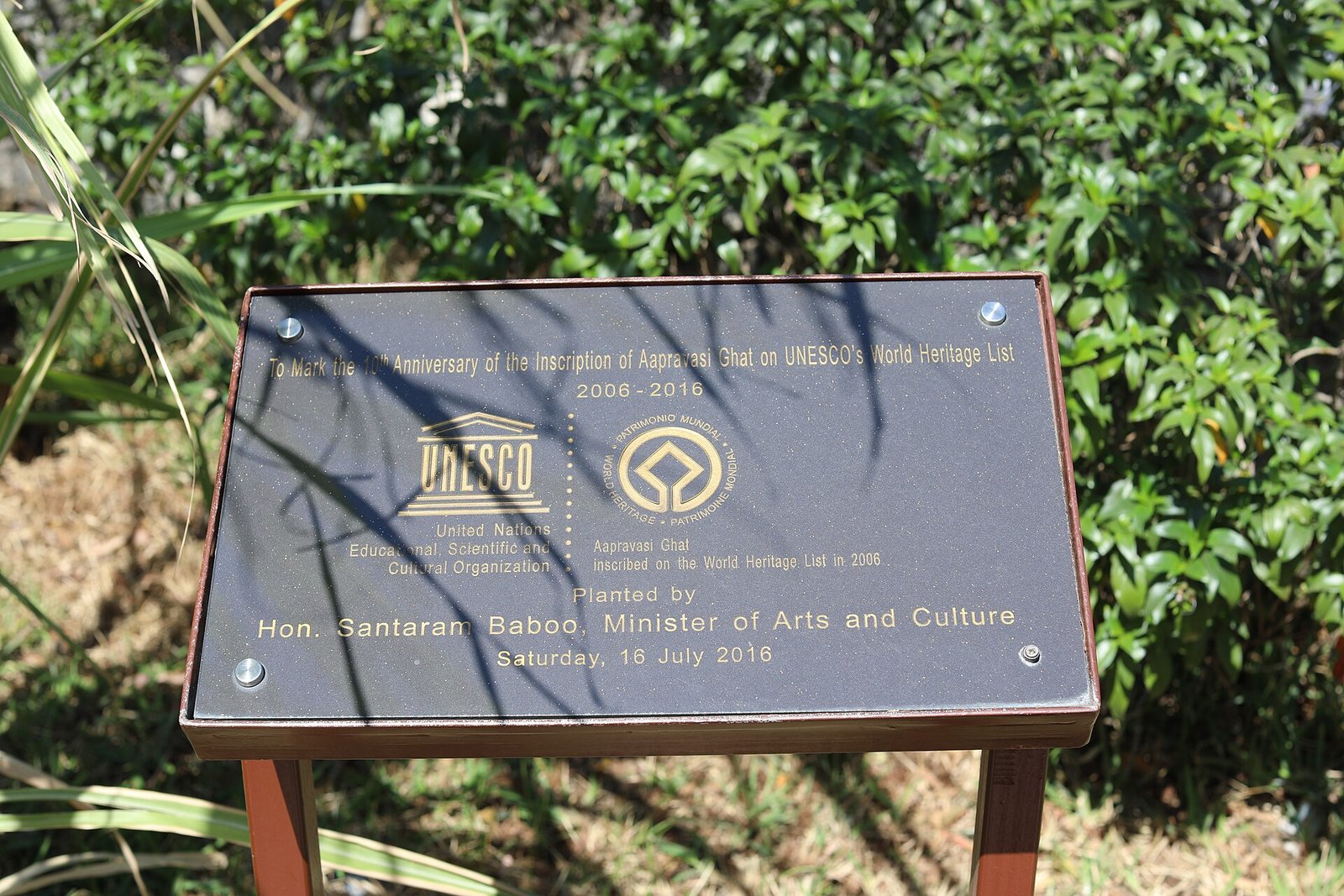
Photo: World heritage signboard at Aapravasi Ghat Museum, Mauritius (57) by Suyash Dwivedi, CC BY-SA 4.0