 By
McDonald’s has lost a legal bid to throw out more than 450 discrimination claims brought by young staff in the UK, according to HR Grapevine. Employment Judge Glennie rejected applications from the company to strike out the claims in their entirety, meaning the complaints can proceed to a full hearing.
The claims involve both McDonald’s and individual franchisees, with claimants seeking to hold both parties liable for alleged failures to safeguard staff. A hearing is expected in April 2027. The central issue is franchise accountability and whether the corporate parent bears responsibility for what happens inside franchised restaurants.
Why franchise accountability matters here
The legal question at the heart of these claims is not whether discrimination occurred, but who should answer for it. McDonald’s operates a heavily franchised model in the UK, with most restaurants run by independent operators under strict brand and operational agreements. Claimants are testing whether those agreements create enough control for McDonald’s to share legal responsibility.
Employment Judge Glennie’s decision to allow the claims to proceed does not mean any discrimination has been proven. It means the tribunal found the claims were not so hopeless that they should be dismissed without a full examination of the evidence. For HR teams in franchised businesses, that distinction matters. A strike-out is a high bar, and clearing it says little about the eventual outcome.
What this means for HR teams in franchised organisations
The case highlights a recurring tension in franchise employment models. Franchisees typically employ their own staff, set rotas and handle day-to-day discipline. But franchisors often dictate training standards, uniform policies, complaint procedures and brand-level safeguarding commitments. When something goes wrong, claimants may argue that the franchisor’s control created a duty of care.
UK employment tribunals assess control on a case-by-case basis. There is no single rule that makes a franchisor liable for franchisee conduct. Factors can include who sets pay and hours, who handles grievances, who provides HR systems and whether the franchisor has the power to intervene. HR leaders in franchised or multi-entity businesses should review where those boundaries sit in their own operations.
Practical steps for employers watching this case
Organisations with franchise or similar operating models can use the time before the April 2027 hearing to examine their own arrangements. The following steps are general good practice, not legal requirements specific to this case.
First, map where employment responsibilities actually sit. If a franchisor provides a complaints hotline, an HR platform or anti-harassment training, document what happens when a report is made. Ambiguity about who investigates and who can act is often where problems compound.
Second, review safeguarding policies for younger workers. The claimants are described as young staff, and UK law includes specific protections for workers under 18, including around working hours, rest breaks and risk assessments. Employers should confirm their policies reflect those rules and that franchisees receive clear guidance.
Third, check indemnity and insurance arrangements between franchisor and franchisee. A tribunal claim naming both parties can create disputes about who pays for defence costs and any award. Clear contractual terms can reduce that friction, though they cannot override statutory liability.
What the April 2027 hearing will examine
The hearing expected in April 2027 will not be a single trial of all 450 claims at once. Tribunal case management is likely to address preliminary issues first, including the scope of any joint liability and whether the claims can be grouped. The volume of claimants alone makes this a significant logistical exercise.
For payroll and HR teams, the practical lesson is about record-keeping. Discrimination claims often turn on patterns of behaviour over time: who was scheduled for which shifts, who received warnings, who was promoted. Franchisees that keep inconsistent records may find it harder to respond to allegations that span multiple sites and managers.
The wider employment law context
UK discrimination law comes primarily from the Equality Act 2010, which protects workers from less favourable treatment based on characteristics including age, sex, race and disability. Claims must generally be brought within three months less one day of the act complained of, though tribunals can extend that limit in some circumstances.
The McDonald’s case is unusual for its scale and for the direct challenge to franchise accountability. Most discrimination claims in the UK are brought against a single employer. Cases naming a parent company alongside a franchisee remain relatively rare, which is why the tribunal’s decision to let these claims proceed has drawn attention.
Employers should not assume the outcome will set a binding precedent for all franchise arrangements. Tribunal decisions are fact-specific, and an appeal could follow any substantive ruling. But the case is a reminder that corporate structures do not automatically insulate a parent brand from employment claims when operational control is shared.
Sources: HR Grapevine
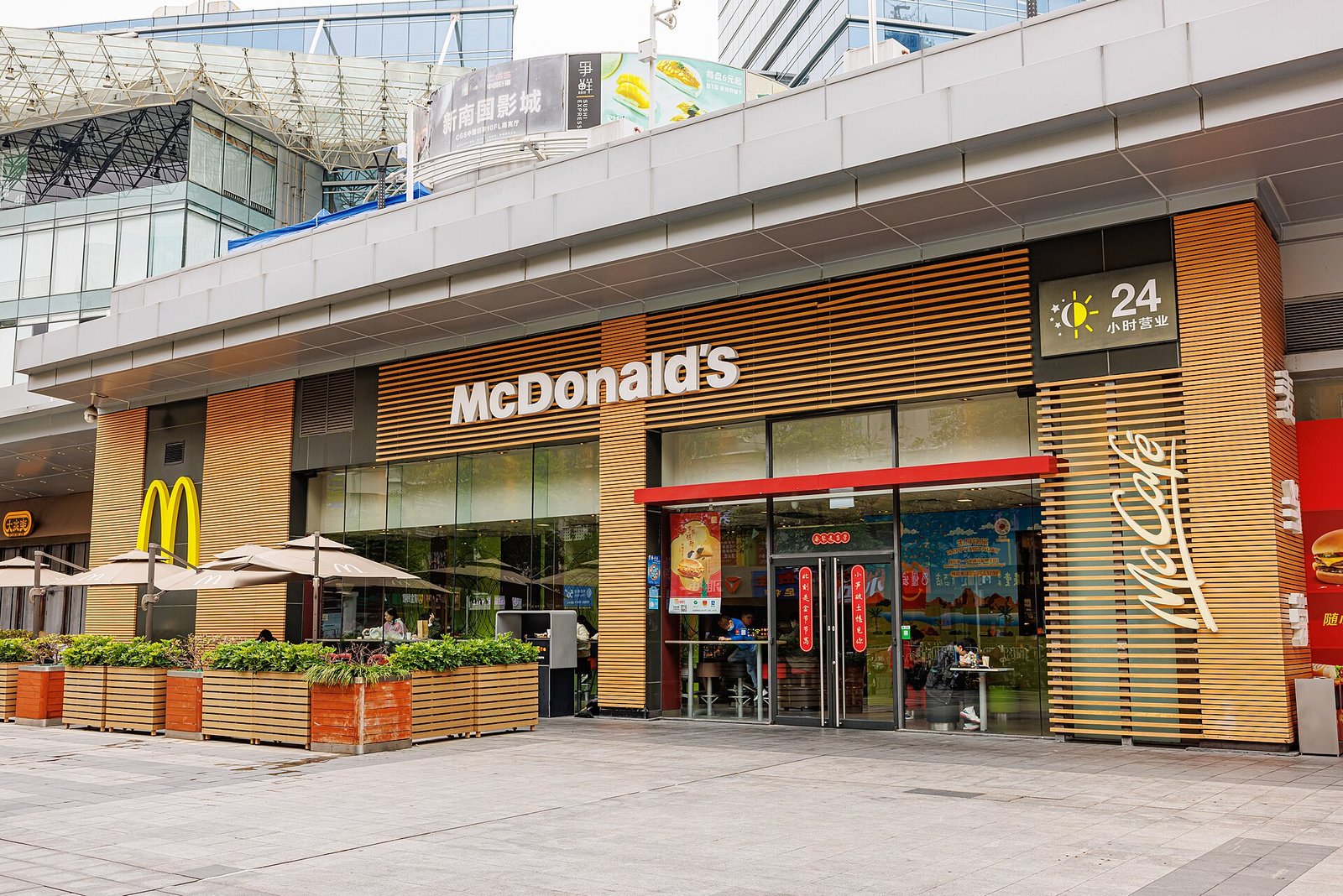
Photo: A McDonald's Restaurant in New City Plaza, Shenzhen by Dinkun Chen, CC BY-SA 4.0