 By
Pakistan’s Overseas Employment Corporation (OEC) has announced 11 skilled operator vacancies in Bahrain, with monthly pay reaching up to BD 220 including allowances. The official recruitment advertisement was issued on 19 November 2026 and applications close on 2 December 2026, according to ProPakistani.
The roles are open to male Pakistani candidates aged 25 to 40. Six positions are for Mobile Crane Operators at BD 200 plus BD 20 per month, and five are for Backhoe Operators (JCB) at BD 130 plus BD 20. Both roles run on two-year renewable contracts with a three-month probation period.
What the package includes under Bahrain employment rules
The advertised terms reflect several standard features of Bahrain’s private-sector employment framework. The employer will cover visa fees, provide accommodation and medical insurance, and pay for full medical treatment after workplace accidents. Air tickets are provided on completion of the two-year contract.
End-of-service payments and overtime will be paid according to Bahrain labour laws. The leave provision is 60 days after completing two years, with leave salary equivalent to two months’ pay. Working hours are eight per day across 26 days each month.
For HR and payroll teams in Bahrain, the most operationally relevant detail is that salaries will be transferred through Bahrain’s Wage Protection System. This is the electronic salary transfer mechanism administered by the Labour Market Regulatory Authority (LMRA). Employers who recruit through OEC or similar channels should already have WPS-compliant payroll runs in place, since the system verifies that private-sector wages are paid through authorised banks or financial institutions.
Licence requirements are the main screening point
Both roles require a valid GCC licence for the relevant equipment. Mobile Crane Operator applicants must hold a GCC Crane Operator licence, and Backhoe Operator applicants must hold a GCC Backhoe Operator licence. This is a hard eligibility requirement, not a preference.
Bahraini employers hiring heavy equipment operators should treat the GCC licence as the first verification step before considering experience or references. The licence confirms that the candidate has already met a regional standard for operating the machinery, which can reduce onboarding time and safety risk. HR teams should still verify the licence’s validity directly with the issuing authority, since the OEC advertisement does not specify how the licence will be checked during recruitment.
What the pay figure means in context
The headline figure of BD 220 per month applies only to the Mobile Crane Operator role when the BD 20 allowance is included. The Backhoe Operator role totals BD 150 per month. The BD 20 appears to be a fixed monthly allowance rather than a variable payment, but the source does not specify its nature.
For Bahrain-based payroll teams, these figures sit below the typical monthly cost of many locally hired skilled operators, but the total cost of employment includes accommodation, medical cover, visa fees and end-of-service accruals. Employers should model the full package rather than comparing base pay alone.
The two-year contract with a three-month probation period is standard for Bahrain’s private sector. Under Bahrain’s Labour Law for the Private Sector, probation cannot exceed six months for workers on monthly wages, so a three-month term is within legal limits. End-of-service payments accrue from the start of employment, not only after probation.
Application steps and deadline
Candidates must apply through the OEC website or job portal. The process requires registration or login, completion of the online application form, generation of a Payment Slip ID through the OEC portal, and payment of the prescribed application fee before submission. The deadline is 2 December 2026.
The OEC advertisement does not state the application fee amount. Candidates should confirm the fee on the portal before generating the payment slip. Bahraini employers awaiting candidates from this batch should note that the OEC process handles the Pakistani side of recruitment, while the Bahraini employer remains responsible for work permits, residency processing and LMRA compliance once candidates are selected.
What HR teams should verify next
The advertisement names a company in Bahrain but does not identify it. HR professionals who recognise the vacancy details should confirm the employer’s LMRA registration and check that the accommodation and medical insurance terms match what is stated in the offer letter and employment contract.
Payroll teams should also confirm that the BD 20 allowance is treated consistently for WPS reporting, overtime calculations and end-of-service accruals. If the allowance is a fixed monthly sum, it may count as basic wage for some calculations and as an allowance for others. Bahrain’s labour law distinguishes between basic wage and total wage for certain entitlements, so payroll should classify the allowance correctly from the first pay run.
Sources: ProPakistani
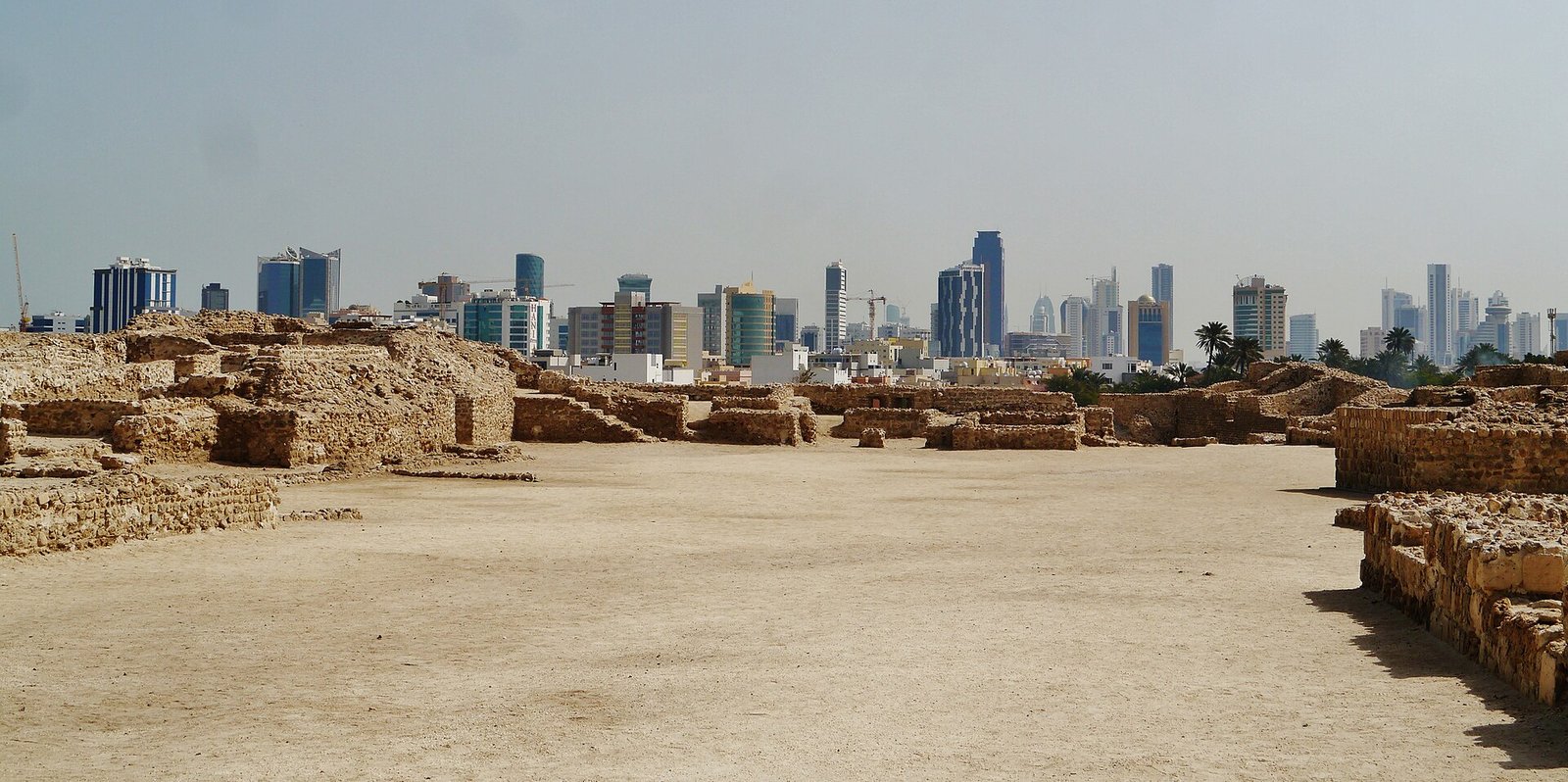
Photo: Manama Qal'at al-Bahrain Courtyard & Skyline 2 by Zairon, CC BY-SA 4.0