

 By
By The Philippines Department of Labor and Employment reported that more than 1.4 million qualified jobseekers were placed through Public Employment Service Offices nationwide in 2026, achieving a placement rate of 91.72 percent. The figures were released around 15 October 2026, during the 26th National PESO Congress held in Lapu-Lapu City, Cebu from 14 to 16 October.
Labor Secretary Francis Tolentino led the congress opening, with President Ferdinand Marcos Jr. attending the opening ceremony. DOLE stated that the PESOs “helped place over 1.4 million qualified jobseekers, achieving a 91.72 percent placement rate and underscoring their vital role in connecting Filipino workers with employment opportunities,” according to the Daily Tribune.
What the 2026 figure actually covers
The 1.4 million figure represents jobseekers placed through PESOs nationwide during 2026. The placement rate of 91.72 percent means roughly nine out of every ten qualified jobseekers referred by a PESO were hired. DOLE has not released a month-by-month breakdown or a regional breakdown in the report cited by the Daily Tribune.
One point of confusion is a separate figure of 1.2 million jobseekers reported by HRM Asia as hired since January. The Daily Tribune figure of 1.4 million is the more current official number, released in mid-October 2026. The HRM Asia report does not state its reporting period end date, so the two figures cannot be directly reconciled. HR and payroll teams citing the number should use the 1.4 million figure from DOLE and note that it was announced at the National PESO Congress.
How PESO placement works in practice
A Public Employment Service Office is a local government unit facility that matches jobseekers with employers, provides career guidance, and issues first-time jobseeker certificates. PESOs operate nationwide, typically at the city or municipal level, and are the front line of DOLE’s employment facilitation mandate.
For a jobseeker, the typical process starts with registration at the local PESO or barangay hall. The jobseeker provides proof of residency and a valid ID. The PESO then assesses skills, refers the jobseeker to employer vacancies, and tracks whether the referral results in a hire. That tracking is what produces the placement rate DOLE reports.
For employers, PESOs act as a free recruitment channel. A company with vacancies can notify its local PESO, which will refer pre-screened candidates. PESOs also issue first-time jobseeker certificates under Republic Act No. 11261, the First Time Jobseekers Assistance Act. The certificate is free and waives government fees for documents needed for employment, such as birth certificates, NBI clearances, and police clearances.

What Tolentino said about PESO gaps
Labor Secretary Tolentino used the congress to make a pointed observation: PESOs are not yet fully institutionalized and need greater support to strengthen their operations. He said PESOs are vital sources of accurate labor market information because they understand community needs, local workers’ capabilities, existing job mismatches, and employer qualification requirements.
Tolentino also said employment facilitation is not solely the responsibility of the national or regional government. It requires active participation from local government units and communities. That statement matters for HR and payroll leaders because it signals that PESO capacity varies by locality. A PESO in a highly urbanized city may have dedicated staff and an active employer network, while a rural PESO may operate with limited resources and fewer employer connections.
Online channels and the first-time jobseeker certificate
Jobseekers can access DOLE services online through the PhilJobNet portal or a DOLE regional office website. The process involves creating an account, uploading a resume, and searching vacancies. PhilJobNet is the national labor market information portal, and it is separate from the physical PESO referral system, though PESOs use it to post local vacancies.
The first-time jobseeker certificate remains free under Republic Act No. 11261. Requirements are proof of residency and a valid ID, obtained from the PESO or barangay hall. The certificate is valid for one year and can be used only once per government document. Employers should be aware that new hires may present this certificate to waive fees for pre-employment documents, which can speed up onboarding.
What the data does not yet show
DOLE has not published a year-on-year comparison with 2024 or 2025 in the Daily Tribune report. The top job categories filled through PESOs in 2026 are also not specified in the source. The most in-demand jobs in the Philippines for the next five years, according to commonly cited labor market outlooks, include healthcare workers, IT and cybersecurity professionals, construction workers, tourism and hospitality staff, logistics and supply chain roles, and green jobs. Those categories are general projections, not a breakdown of the 1.4 million PESO placements.
| Item | Detail |
|---|---|
| Jobseekers placed in 2026 | Over 1.4 million |
| Placement rate | 91.72 percent |
| Reporting authority | DOLE, announced at 26th National PESO Congress |
| Congress location and dates | Lapu-Lapu City, Cebu, 14 to 16 October 2026 |
| First-time jobseeker certificate law | Republic Act No. 11261 |
| Online job portal | PhilJobNet |
For HR and payroll teams in the Philippines, the practical takeaway is that PESOs remain a significant but unevenly resourced hiring channel. The 1.4 million figure confirms scale, but Tolentino’s remarks suggest employers should not assume uniform service quality across localities. Companies hiring in multiple regions may need to build direct relationships with individual PESO offices rather than relying on a single national process.
Sources: Daily Tribune
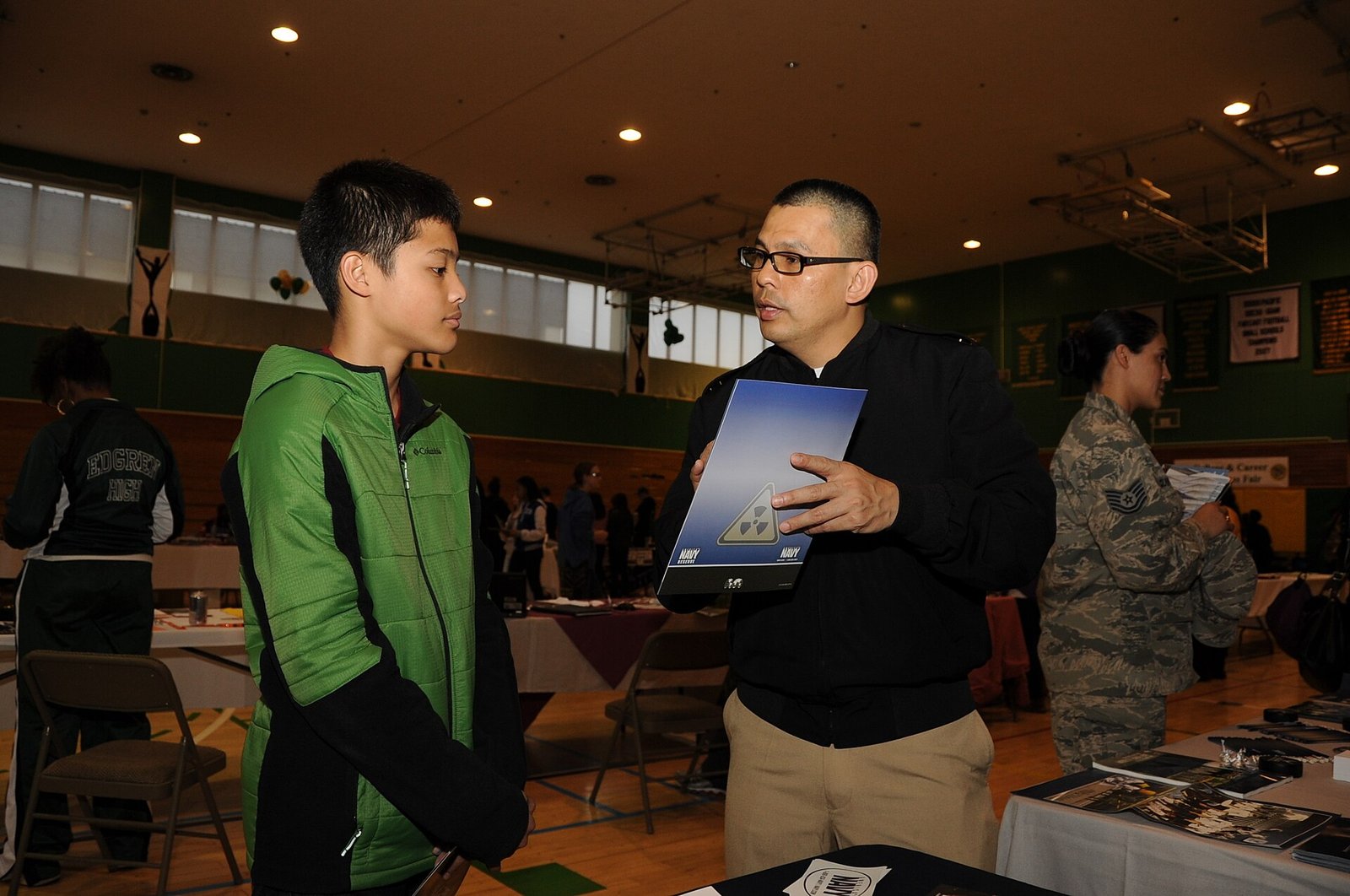
Photo: College fair at Misawa Air Base, Japan's Robert Edgren High School 150416-N-EC64 by Senior Chief Petty Officer Ryan Delcore, Public domain