

 By
Tamil Nadu has secured fresh investment commitments worth more than Rs 58,000 crore from 78 companies, with the potential to create nearly 66,000 jobs, according to HRKatha. The agreements were signed at an investor conclave held by the state government, which was also used to advance several previously announced industrial projects.
A large share of the investments will flow into manufacturing, electronics, automotive, semiconductor and engineering sectors. Hosur and Krishnagiri emerged as key beneficiaries, attracting projects worth more than Rs 12,600 crore and generating around 14,600 jobs. Major commitments include capacity expansion by TVS Motor, a new precision-components facility by Titan, an electric scooter-manufacturing plant by Ultraviolette, and India’s first electric motorcycle manufacturing project by Royal Enfield, expected to create about 500 jobs.
Where the jobs will be concentrated
The investment spread across 25 districts gives HR teams a clearer map of where hiring pressure will build. Beyond Hosur and Krishnagiri, the named districts include Dharmapuri, Virudhunagar, Cuddalore and Theni. For payroll and workforce planning, this matters because several of these districts have different labour availability profiles and wage expectations than Chennai’s established industrial belt.
Of the 78 agreements signed, 58 relate to entirely new ventures, 18 involve expansion of existing operations, and two projects combine fresh investments with expansion plans. New ventures typically require building HR functions from scratch: recruitment teams, payroll setup, statutory registrations under the Employees’ Provident Fund Organisation and the Employees’ State Insurance Corporation, and compliance with the Tamil Nadu Shops and Establishments Act. Expansion projects, by contrast, will lean on existing HR infrastructure but face pressure to scale hiring quickly without disrupting current operations.
The skills mix behind the announcements
The sectors named in the commitments point to a specific talent profile. Advanced manufacturing, electric mobility, aerospace, defence, electronics and semiconductor-related roles will dominate demand. These are not uniformly available in every district, which means employers may need to plan for relocation incentives, hostel or housing support, and partnerships with local industrial training institutes and polytechnics.
The source notes that opportunities are expected across both technical and support functions. For HR teams, that means job requisitions will range from production technicians, quality engineers and maintenance staff to finance, procurement, HR generalists and payroll administrators. The support function demand is often understated in investment announcements but is real: every new plant needs payroll processing, statutory compliance, workforce administration and contractor management from day one.

Foreign investment and payroll complexity
Fourteen foreign companies from South Korea, Germany, Sweden, Finland, Singapore, Brazil and the United States committed nearly Rs 14,800 crore in investments. Foreign-owned manufacturing units bring additional payroll and HR considerations that domestic expansions do not.
Expatriate employees may require tax residency determinations, work visas and international payroll arrangements. Indian payroll teams will need to handle split payrolls where part of an expatriate’s salary is paid overseas and part in India, with careful attention to tax equalisation policies. Companies from countries such as South Korea and Germany often bring their own HR practices, shift patterns and performance management expectations, which local HR teams must reconcile with Indian labour law and Tamil Nadu practice.
Employers should confirm specific registration and compliance requirements with their own legal advisers, since obligations under the Code on Wages, the Industrial Relations Code and state-specific rules depend on the nature of the establishment and the number of workers.
What HR teams should do now
The announcement does not specify a timeline for implementation beyond the expected job creation. HR leaders in the named sectors should treat the commitments as a signal to begin workforce planning before formal hiring requisitions arrive.
| Action | Why it matters | Timing |
|---|---|---|
| Map skills availability in the 25 named districts | Identifies where recruitment will be hardest | Before hiring begins |
| Review payroll and statutory registrations for new sites | New ventures need EPF, ESI and state registrations | At site setup |
| Plan contractor and staffing vendor capacity | Large manufacturing projects rely on contract labour | 3 to 6 months before production |
| Assess expatriate payroll readiness for foreign investors | Foreign-owned units often bring overseas staff | During project planning |
The commitments reinforce Tamil Nadu’s position as a major manufacturing and employment destination. For HR and payroll leaders, the practical work is to convert headline job numbers into a district-by-district hiring plan, a compliance checklist for new establishments, and a payroll design that handles both domestic and expatriate employees without last-minute corrections.
Sources: HRKatha
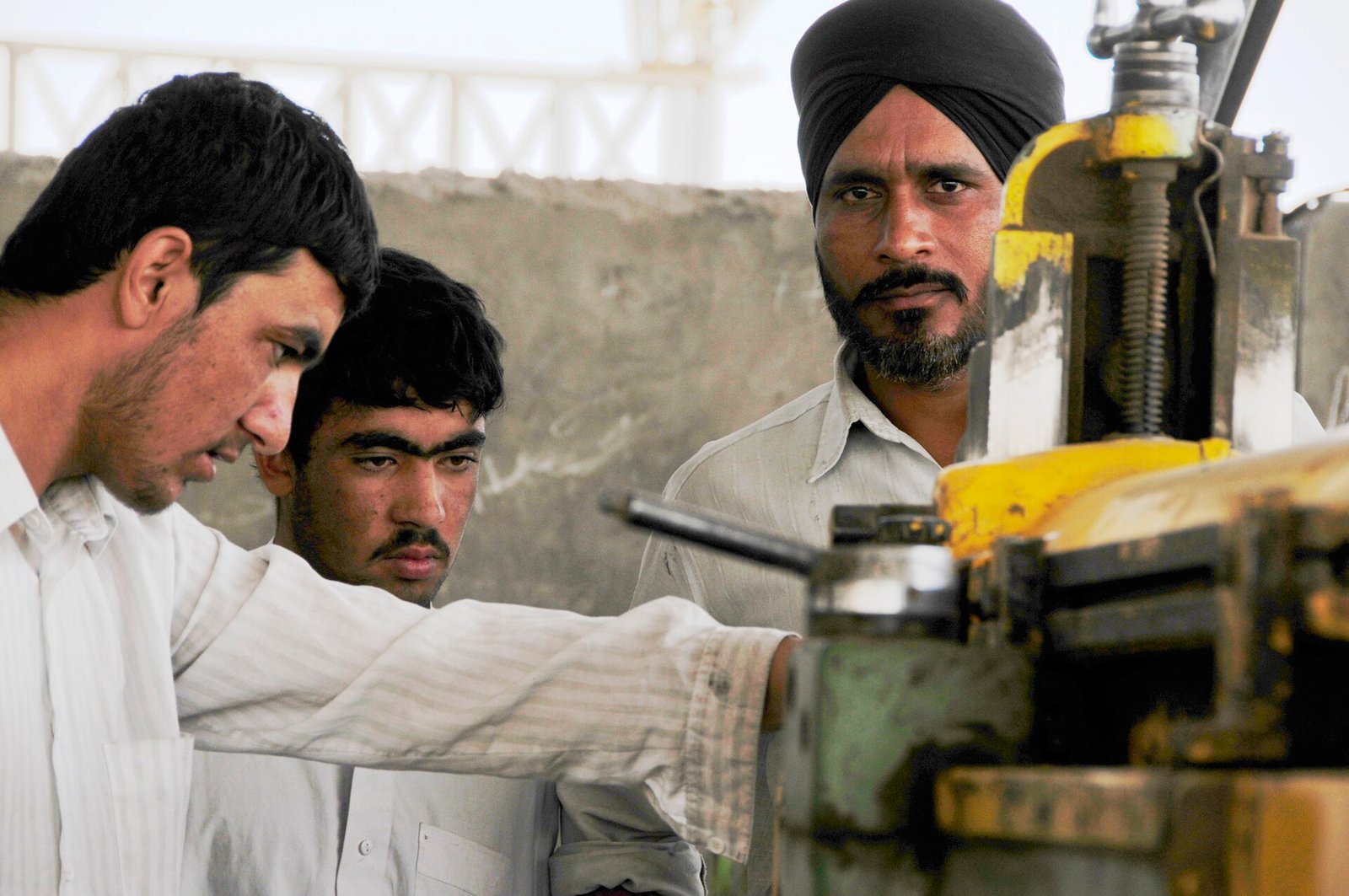
Photo: Factory workers in Herat by Mass Communications Specialist 2nd Class Riza Caparros, Public domain