 By
The U.S. Department of Labor has issued an opinion letter addressing whether concession workers at temporary food stands at fairs and concerts qualify for the Fair Labor Standards Act’s seasonal amusement exemption. According to HRMorning, the DOL said a concessions company that runs temporary food stands at seasonal events may not owe those workers federal minimum wage or overtime, provided specific conditions are met.
The letter, FLSA2026-14, responds to an unnamed outside concessions company that hires workers by event. Fair jobs last about three months, while concert jobs last about two weeks. The DOL’s answer was conditional: the exemption applies only if each event and its food stands, taken together, meet one of two seasonal tests.
What the FLSA seasonal amusement exemption covers
The Fair Labor Standards Act exempts certain seasonal amusement or recreational establishments from minimum wage and overtime requirements. The exemption is not automatic for every business that operates outdoors or sells food at events. An employer must show that its establishment has an amusement or recreational purpose and that it operates on a seasonal basis.
The DOL’s letter applies that framework to a concessions company whose food stands operate inside larger events such as state fairs and concerts. The agency concluded that the company’s stands are part of the same establishment as the host event, even though separate companies run them. That matters because the exemption turns on the character of the establishment where the work occurs, not on the corporate identity of the vendor.
The two seasonal tests employers must meet
The DOL listed two ways an event and its food stands, taken together, can satisfy the seasonal requirement. The first test looks at operating months: the establishment operates no more than seven months in any calendar year. The second test looks at receipts: the busiest six months accounted for at least 75 percent of total receipts in the preceding calendar year.
| Test | Standard | What it measures |
|---|---|---|
| Operating months | No more than seven months in any calendar year | Duration of operations |
| Receipts | Busiest six months equal at least 75 percent of prior year receipts | Concentration of revenue |
An employer needs to meet only one of these tests, not both. The DOL’s letter did not state which test the unnamed concessions company satisfied. HR and payroll teams should document which test they rely on and keep records that support that choice.
What this means for HR and payroll teams
For employers that run concession stands at fairs, festivals, concerts and similar events, the letter provides a clearer path to treating those workers as exempt from federal minimum wage and overtime. That has direct consequences for payroll setup, timekeeping and wage calculations.
Payroll teams should still track hours worked. Even exempt workers may need hour records for state law purposes, scheduling, or internal cost allocation. The exemption affects federal minimum wage and overtime only. It does not address state wage and hour laws, which may impose different or stricter requirements.
HR teams should review job descriptions and hiring documents for seasonal concession workers. The exemption applies to the establishment, not to individual job titles. A worker hired for a three-month fair season or a two-week concert run may fall within the exemption if the event and stands meet a seasonal test. A worker assigned to a year-round venue would not.
The regional caveat for Connecticut, New York and Vermont
The DOL specifically said employers in Connecticut, New York and Vermont should rely on the letter only where it agrees with a 2016 court ruling. That ruling, according to HRMorning, lets a qualifying concession company pass a seasonal test on its own rather than only as part of a host event.
The practical effect is that employers in those three states face a narrower or different standard. A concessions company in Connecticut, New York or Vermont should not assume the letter’s establishment analysis controls. Payroll and legal teams in those states should review the 2016 ruling before changing pay practices.
Employers elsewhere in the United States can look to the letter as the DOL’s current interpretation, but state agencies and courts may still reach different conclusions under state law.
Steps employers should take now
First, identify which events the company serves and whether each event has an amusement or recreational purpose. A food stand at a trade show or corporate expo likely does not qualify.
Second, apply one of the two seasonal tests to each event and its stands together. Document the operating calendar or the receipts data used. Keep that documentation with payroll records.
Third, confirm whether any state-specific rulings affect the analysis. The DOL’s letter names Connecticut, New York and Vermont, but other states may have their own wage orders or court decisions.
Fourth, review worker classifications before the next event season. Misclassification can create back pay exposure for overtime and minimum wage violations. The opinion letter offers a defense only where the facts match the scenario the DOL described.
The letter does not state a compliance deadline or announce further agency action. Employers should treat it as interpretive guidance, not a new regulation.
Sources: HRMorning
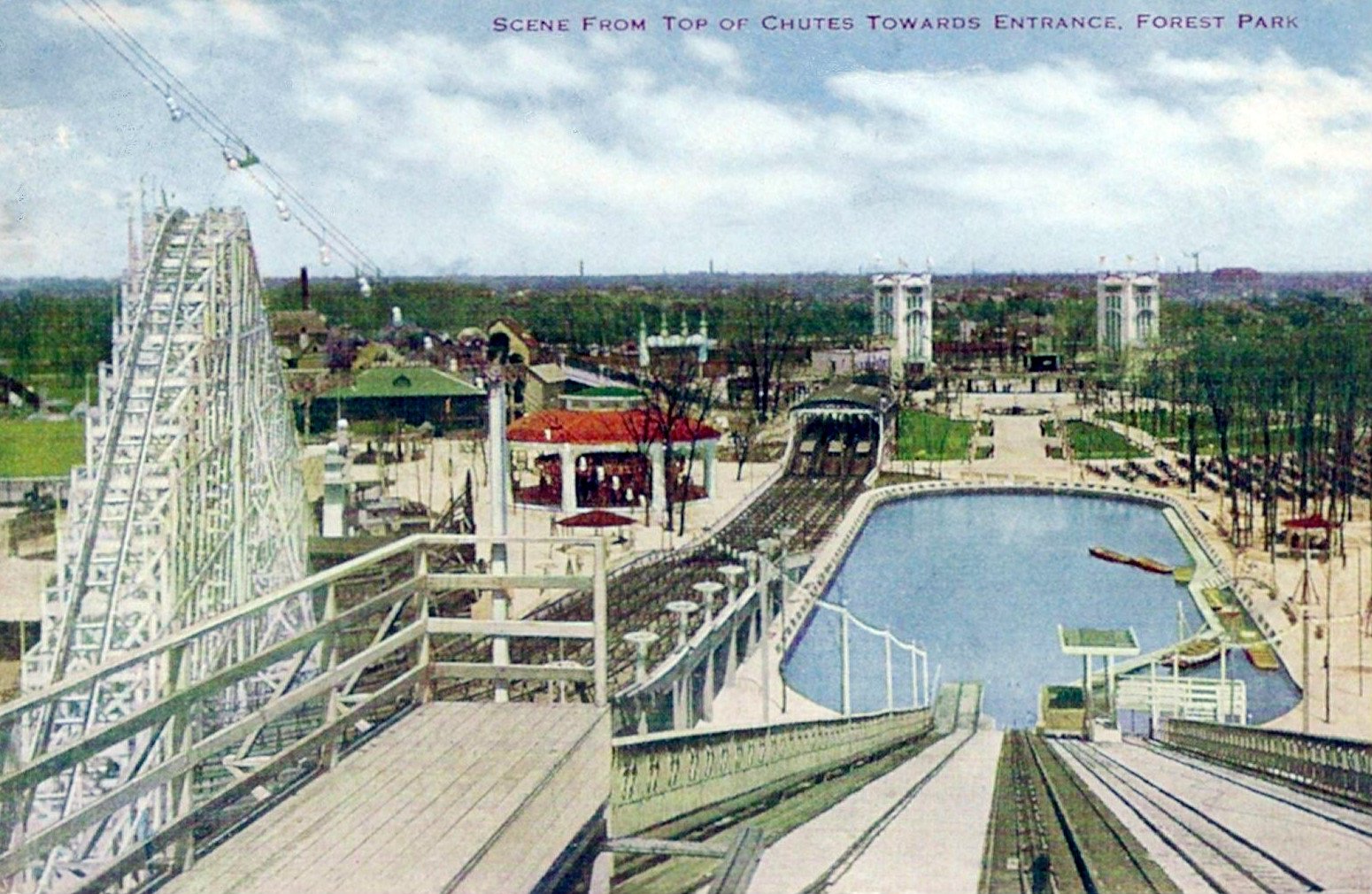
Photo: Forest Park Illinois amusement park chutes by V. O. Hannon Publishing, Public domain