 By
Jordan’s Ministry of Labour and the International Labour Organization (ILO) issued a joint statement on 17 November 2026 reaffirming their commitment to decent work and stronger labour governance in the country’s garment sector. The statement, reported by the ILO from Amman, announced a new project called “Better Work and Labour Governance for a Resilient Garment Sector in Jordan,” which re-establishes Better Work in Jordan. Better Work is a joint global initiative of the ILO and the World Bank Group’s International Finance Corporation (IFC).
The Government of Jordan is providing US$3 million in domestic funding for the project. It builds on a Letter of Intent signed in July 2026 and on more than 15 years of cooperation between the ILO and Jordanian constituents in the garment sector. Under the July 2026 Letter of Intent, immediate measures were launched with US$100,000 in government financial support alongside ILO contributions. The statement contains no direct quotes from named individuals, but says the partnership reflects “strong national ownership” and a determination to deliver “tangible and sustainable results for workers, enterprises and the Jordanian economy.”
What the project will actually do
The cooperation is structured around five outcomes. The first is stronger workplace compliance through Better Work factory assessments, advisory services, workplace learning and time-bound improvement plans. The second is stronger labour inspection, with support for the Ministry of Labour’s inspectorate covering inspection methodologies, inspector training, complaint management and follow-up.
The third outcome targets forced labour prevention and response, including risk identification, remediation, corrective action, referral mechanisms and preventive systems. The fourth covers fair recruitment, migrant worker protection and access to remedy, with a focus on strengthening workers’ centres as safe resources offering labour rights information, grievance redressal, referrals, psychosocial services and social inclusion. The fifth outcome supports social dialogue and representative institutions, including workplace and sector-level dialogue and the National Council for Decent Work and Improving Working Conditions in the Garment and Textiles Sector.
Why this matters for HR and payroll teams in Jordan
For HR managers and payroll leads with garment sector operations in Jordan, the project signals that factory-level compliance will face renewed scrutiny. Better Work’s return means independent assessments are likely to resume or expand, with time-bound improvement plans that employers will be expected to address. Payroll teams should prepare for closer examination of wage records, working hours, overtime calculations and leave entitlements, since factory assessments typically review documentation alongside worker interviews.
The emphasis on migrant worker protection is significant because Jordan’s garment workforce includes a substantial number of migrant workers, particularly from South and Southeast Asia. HR teams should review recruitment contracts, fee-charging practices and grievance channels for migrant employees. The project’s focus on fair recruitment suggests that employers may face questions about whether workers paid recruitment fees or face restrictions on movement, accommodation or contract changes. Payroll and HR systems should be able to demonstrate that wages are paid on time, in full and to accounts controlled by workers themselves.

The institutional context employers should know
The project works through Jordanian institutions rather than replacing them. The Ministry of Labour’s inspectorate will receive training and methodological support, which means inspections may become more consistent and more technically informed. The National Council for Decent Work and Improving Working Conditions in the Garment and Textiles Sector is named as a key forum, bringing together government, employers’ and workers’ organizations.
Employers should understand that Better Work operates through a model of assessment followed by advisory support and improvement planning, not simply enforcement. That creates a window for HR teams to engage constructively with assessment findings before they escalate into formal enforcement action. The ILO statement describes the approach as supporting a “responsible, resilient, and internationally competitive” garment sector, which suggests that compliance is framed as part of maintaining Jordan’s access to international buyers who increasingly require evidence of labour standards.
Practical steps for employers
HR and compliance teams should start by mapping current practices against the five outcomes. That means reviewing wage and hour records, recruitment files for migrant workers, grievance logs and worker representation structures. Employers with existing worker committees or union representation should document how those bodies operate and how issues are escalated.
Payroll teams should verify that systems can produce accurate records for inspectors and Better Work assessors, including overtime calculations, deductions and proof of payment. For migrant workers, HR should confirm that contracts match actual conditions, that passports and identity documents are not withheld, and that workers have access to information about their rights in languages they understand.
The project’s timeline is not specified in the ILO statement beyond the November 2026 announcement and the July 2026 Letter of Intent. Employers should treat the coming months as a preparation period, since Better Work assessments and inspectorate capacity-building are likely to follow the formal project launch.
What remains unclear
The ILO statement does not specify which factories will be assessed first, how frequently assessments will occur, or what consequences will follow from non-compliance. It also does not detail how the US$3 million will be allocated across the five outcomes. Employers should watch for further announcements from the Ministry of Labour and the National Council, since those bodies are likely to communicate implementation details to the sector.
The statement’s reference to “time-bound improvement plans” suggests that factories will receive deadlines for corrective action, but the length of those periods is not stated. HR teams should not assume that existing compliance programmes will automatically satisfy the new project’s requirements, particularly where migrant worker protections and forced labour prevention are concerned.
Sources: International Labour Organization
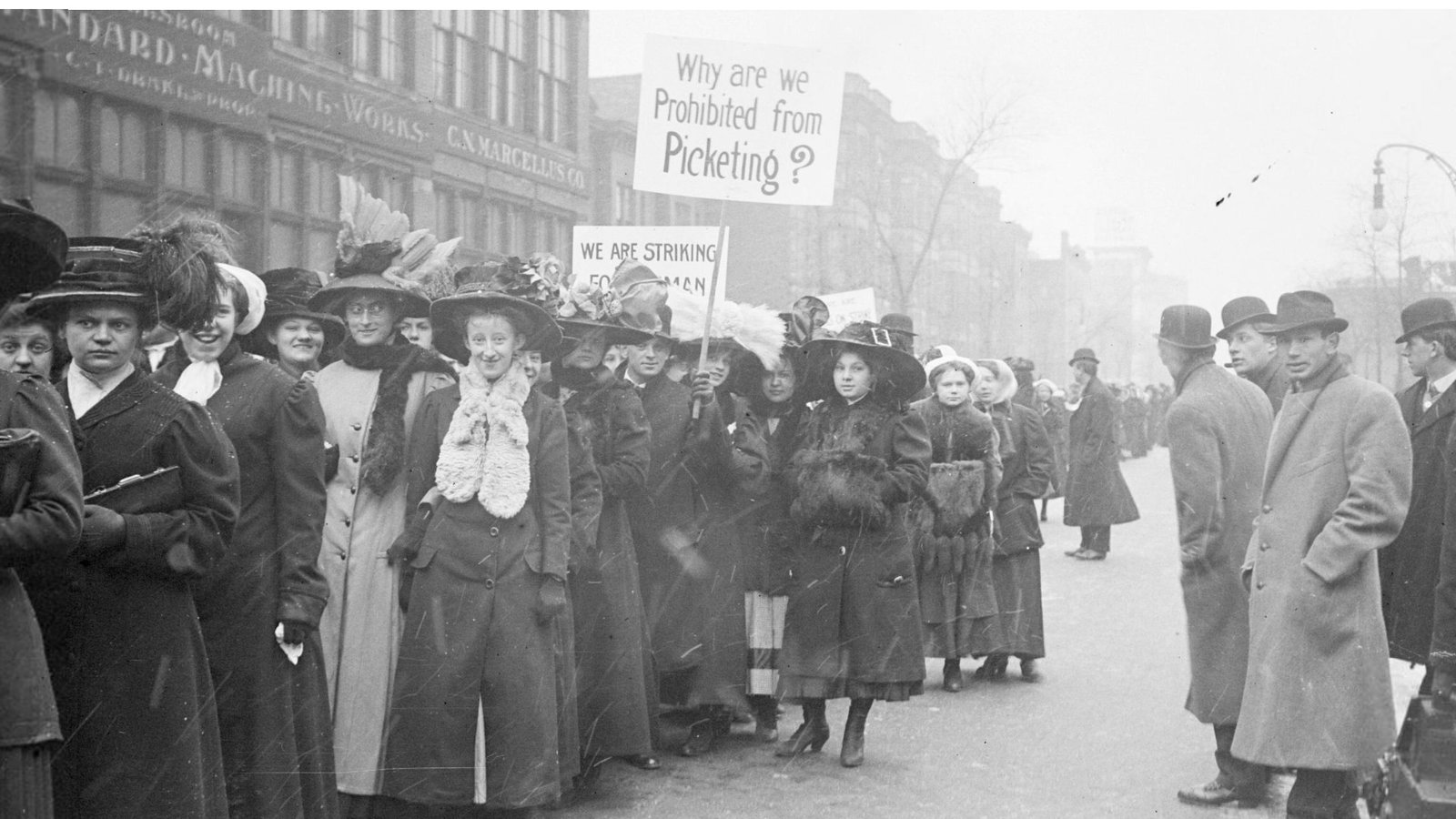
Photo: Chicago garment workers' strike by Unknown authorUnknown author, Public domain